If the furnace stops on a cold night, call (321) 478-0693 any time, but spend ten minutes on these first. Check, in order: the thermostat setting and batteries, the furnace breaker, the service switch near the furnace, the air filter, the blower door, the PVC vent pipes outside, and the condensate drain.
Those seven things account for a real share of no-heat calls, and none of them needs a tool or an open panel.
One rule comes before all of them. If you smell gas or a carbon monoxide alarm is going off, skip the checklist entirely.
Gas smell or a CO alarm: leave first, check nothing
Do this, in this order
Get everyone out of the house, pets included. Do not flip light switches, use the thermostat or start the car in an attached garage. Once you are outside, call 911 and PECO's gas emergency line. Nobody should go back in until the fire department or PECO says it is safe.
A furnace that shuts itself off is often doing its job. Several of its safety devices stop the burner when exhaust is not leaving the house, which is why the checks below stop at looking, never at forcing anything to run.
The seven checks, start to finish
- Thermostat. Set to Heat, not Cool or Off, and set a few degrees above room temperature. If the screen is blank or dim, replace the batteries.
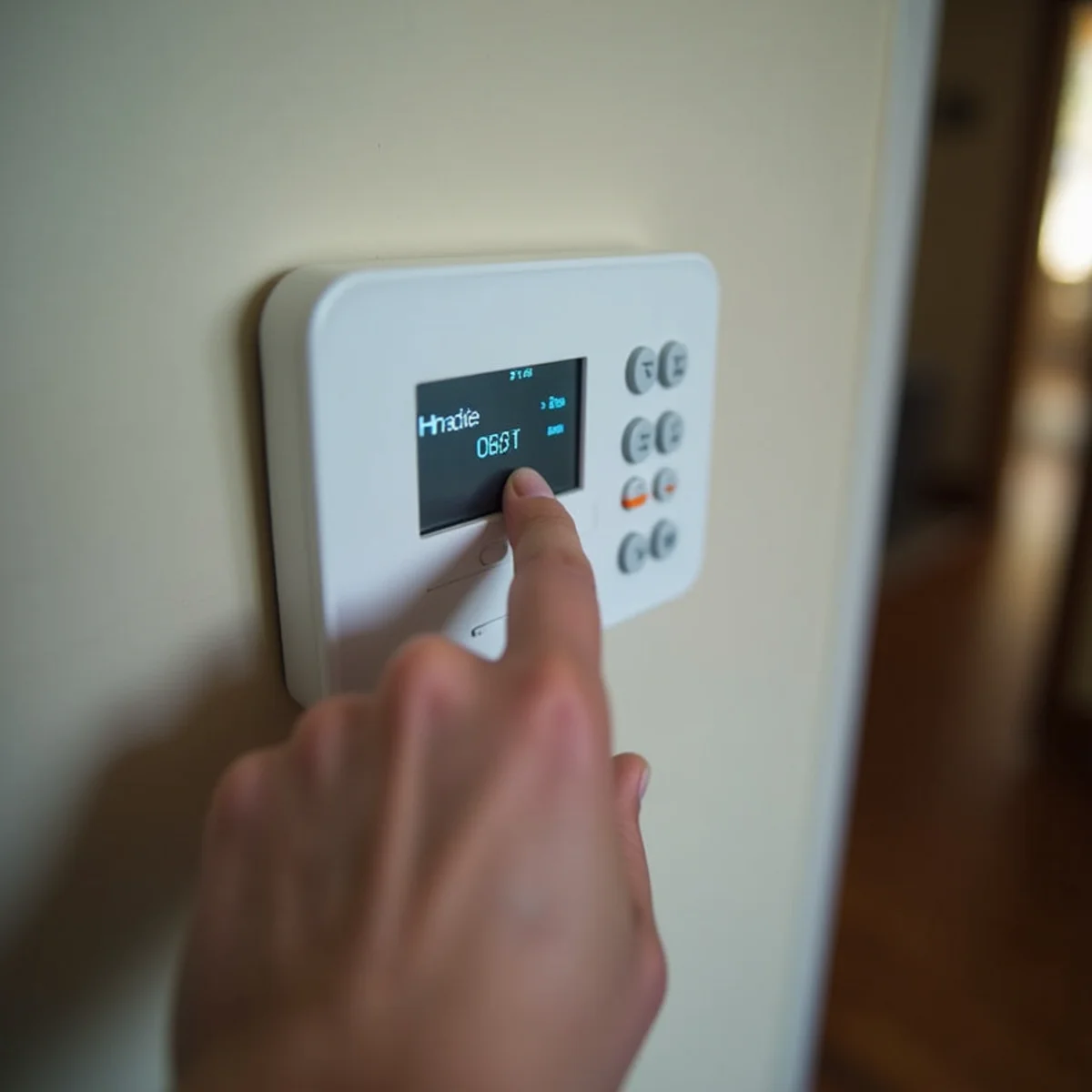
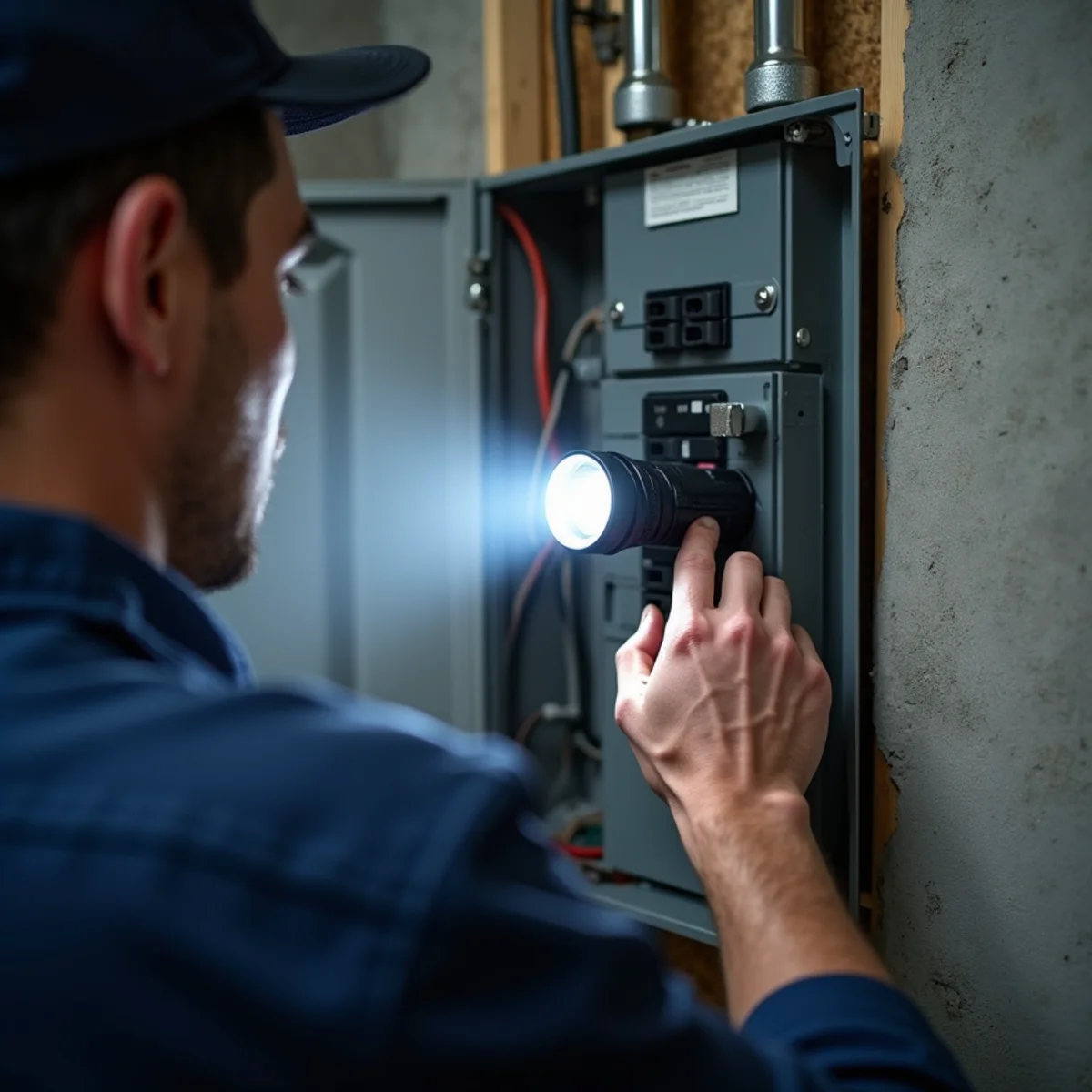
- Breaker. Find the breaker labeled furnace, HVAC or air handler. If it is tripped, reset it once. If it trips again, leave it off.
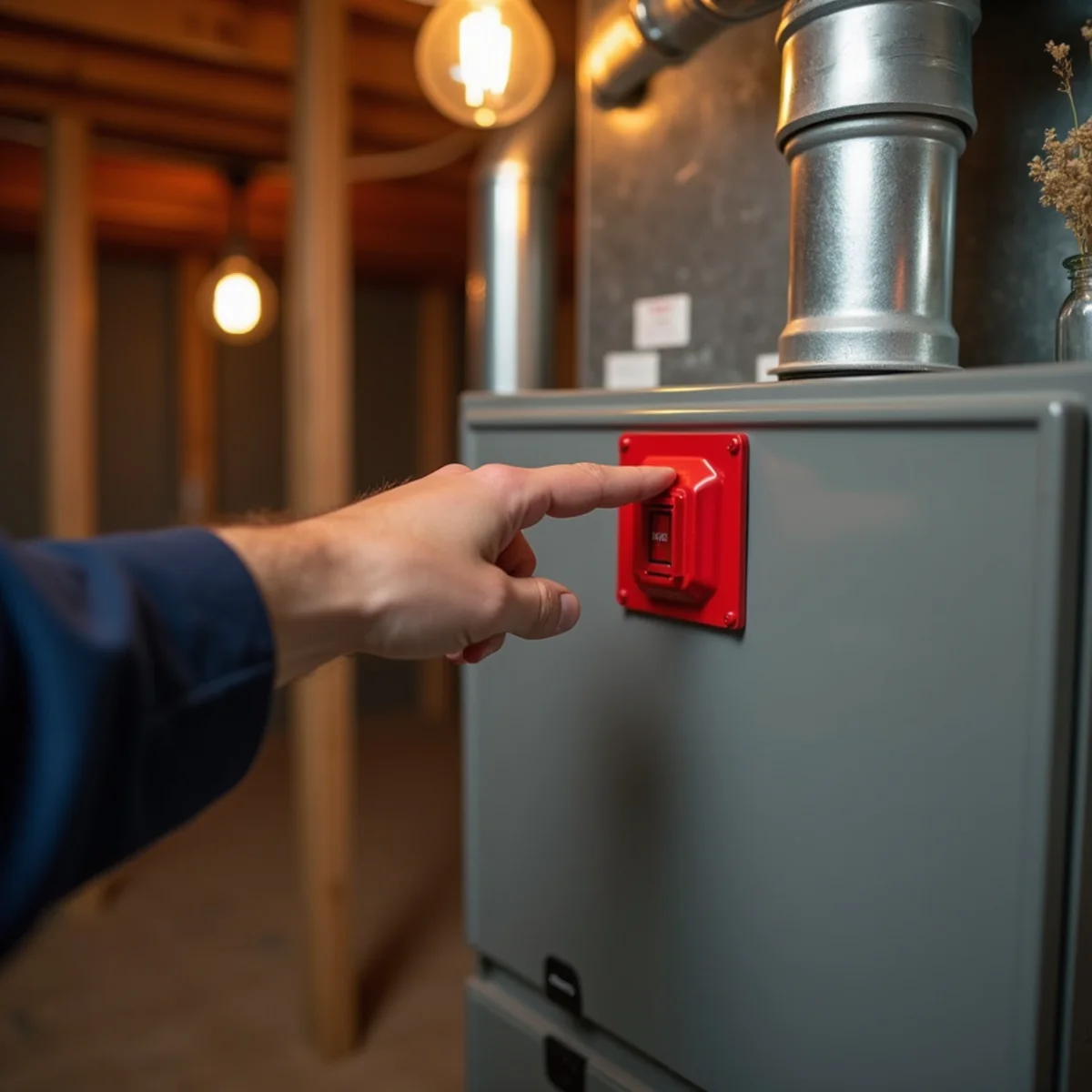
- Service switch. Look for a light switch on the wall, ceiling joist or stairway near the furnace. It gets flipped off by mistake more often than anyone admits.
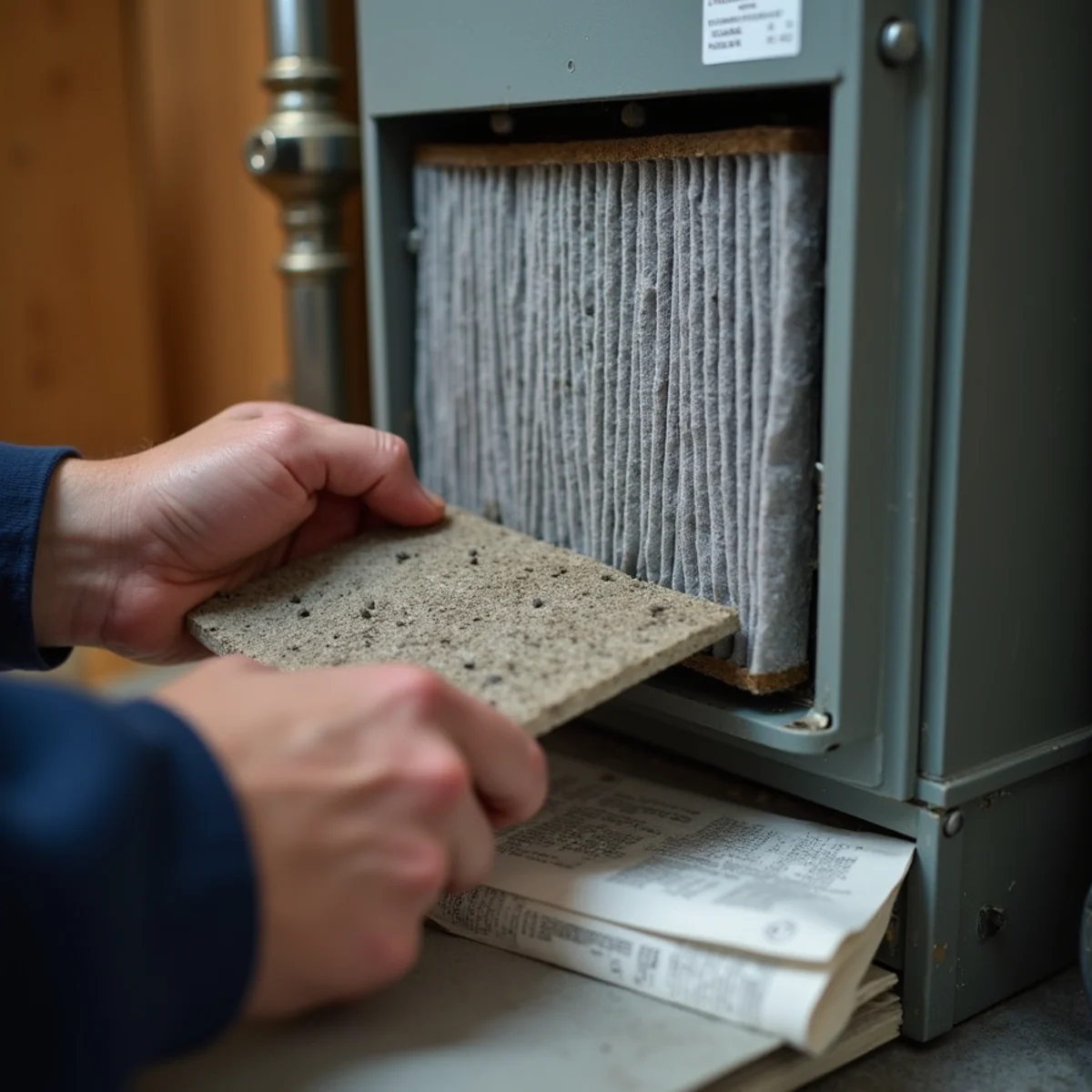
- Air filter. A filter packed with dust can make the furnace overheat and shut down on its high-limit switch. Swap it if you have a spare.
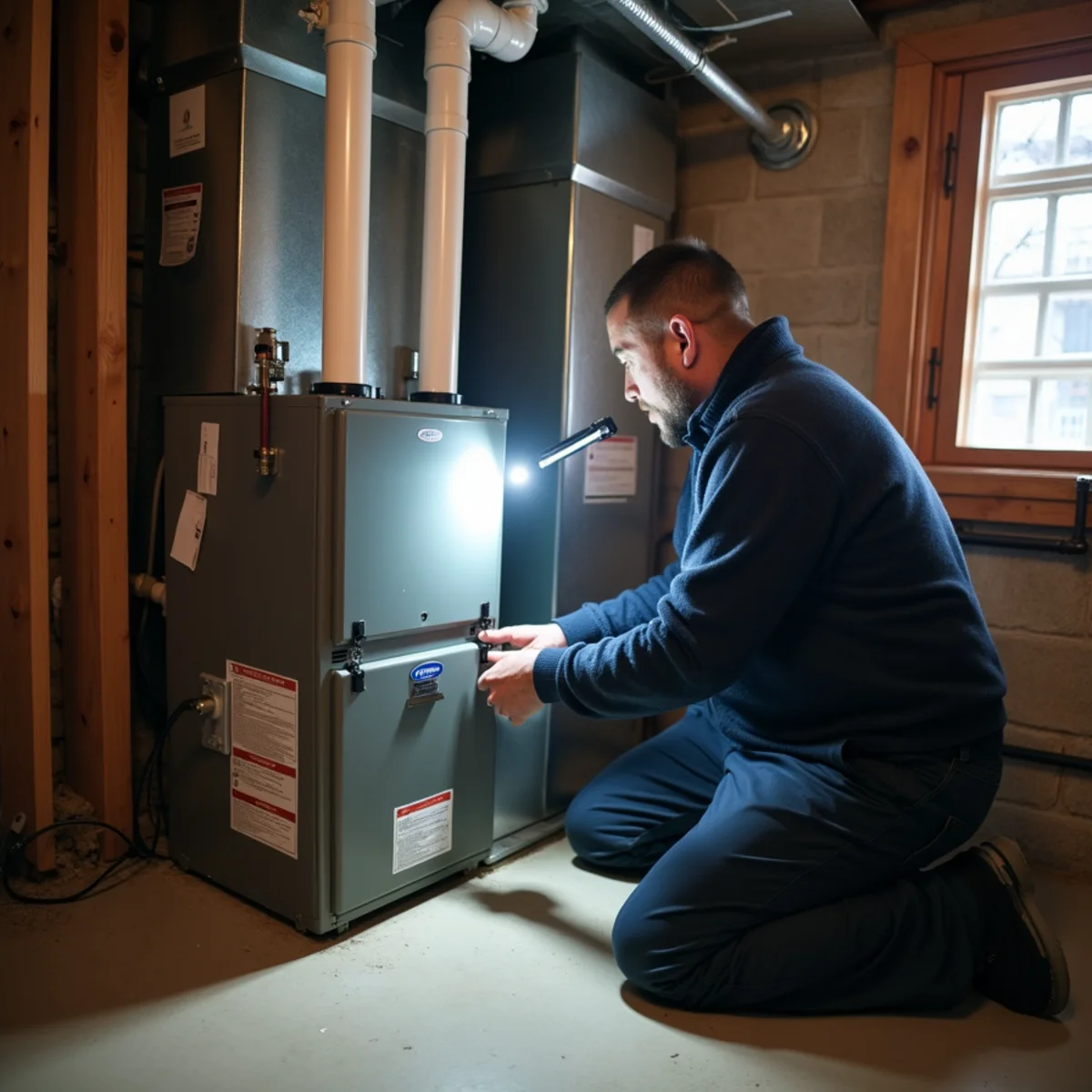
- Blower door. The front panel presses a safety switch. If it was bumped or not seated after a filter change, the furnace will not run. Push it firmly into place; do not remove it.
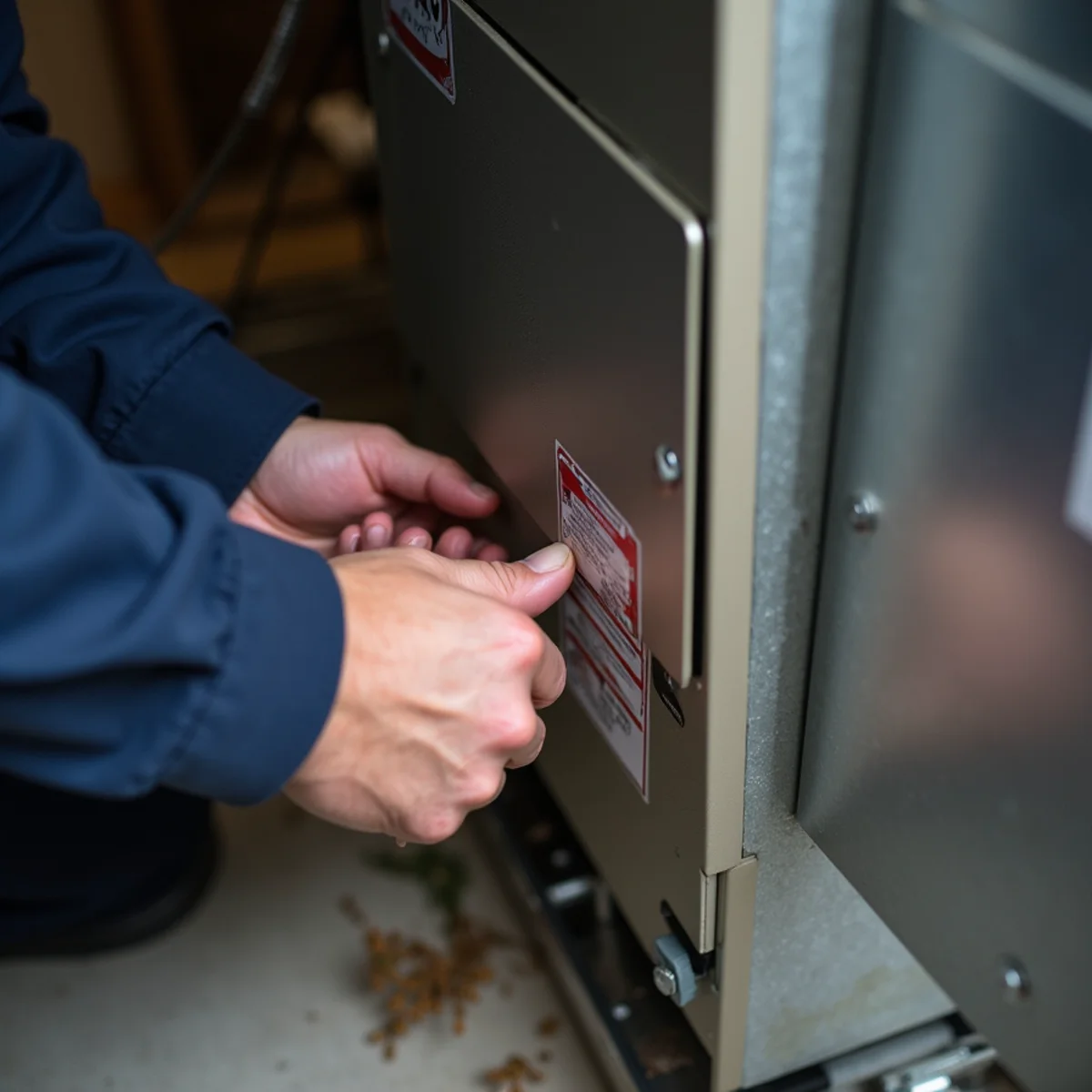
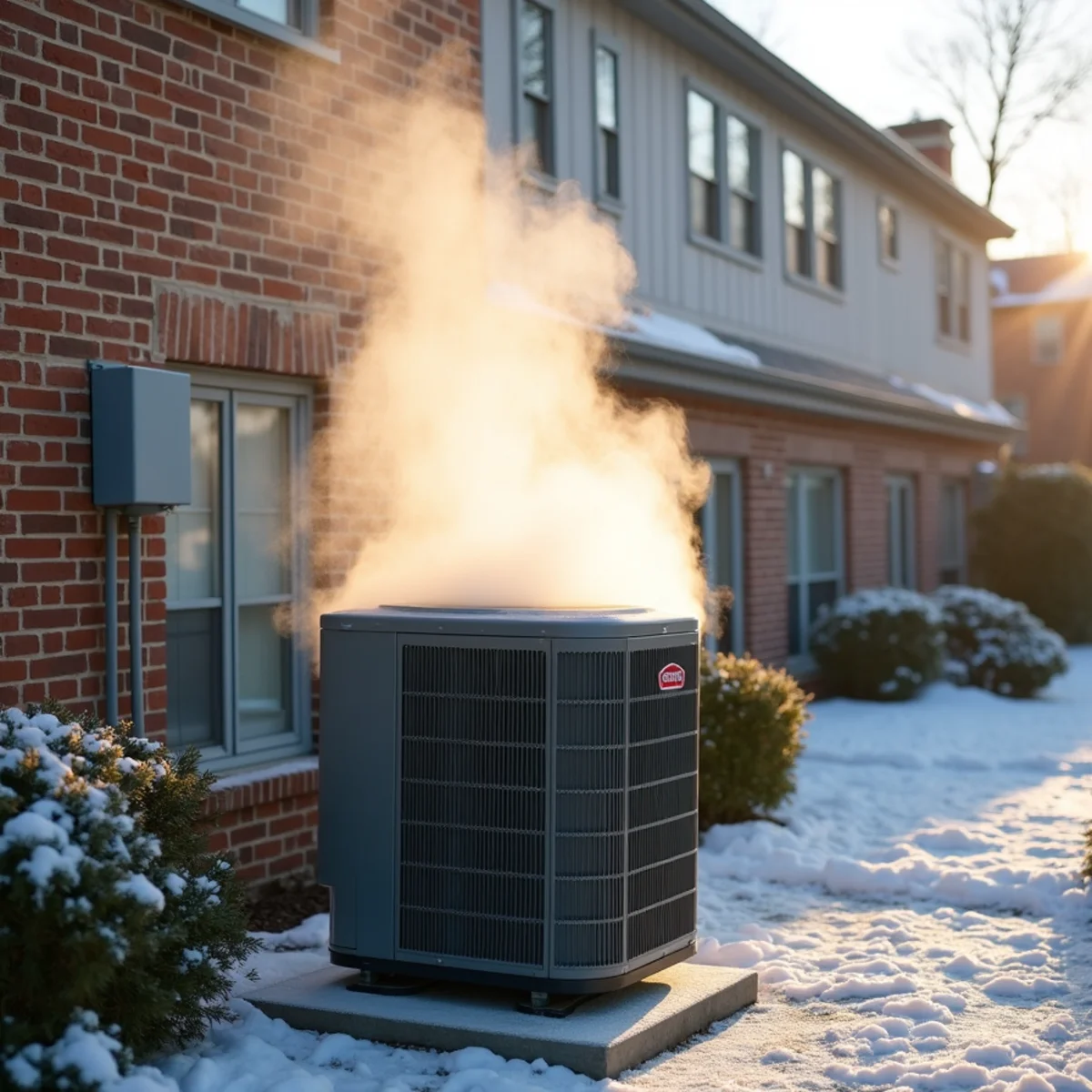
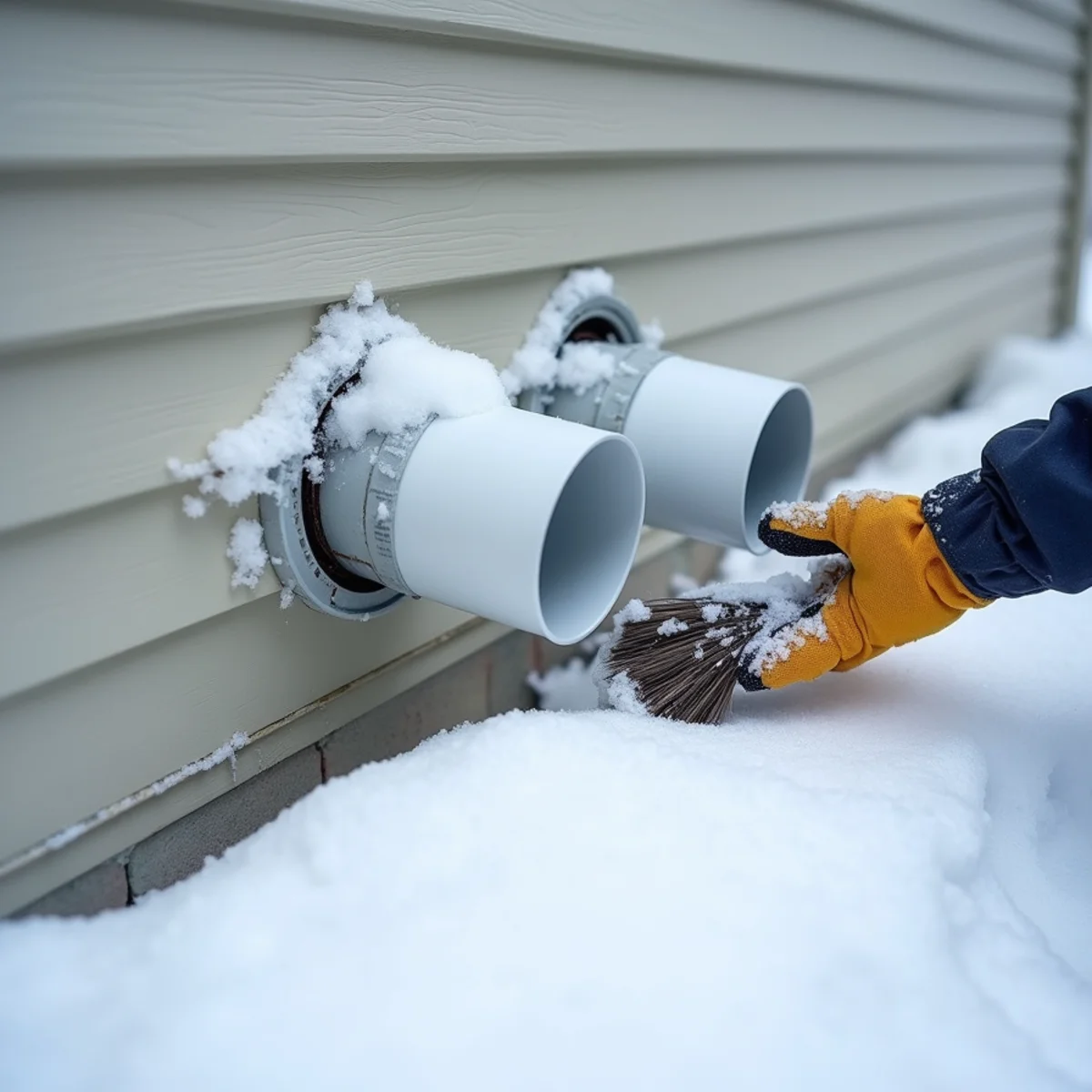
- PVC vent pipes outside. On a high-efficiency furnace, two white pipes leave through a side wall. Clear snow, ice, leaves or a nest from around the openings.
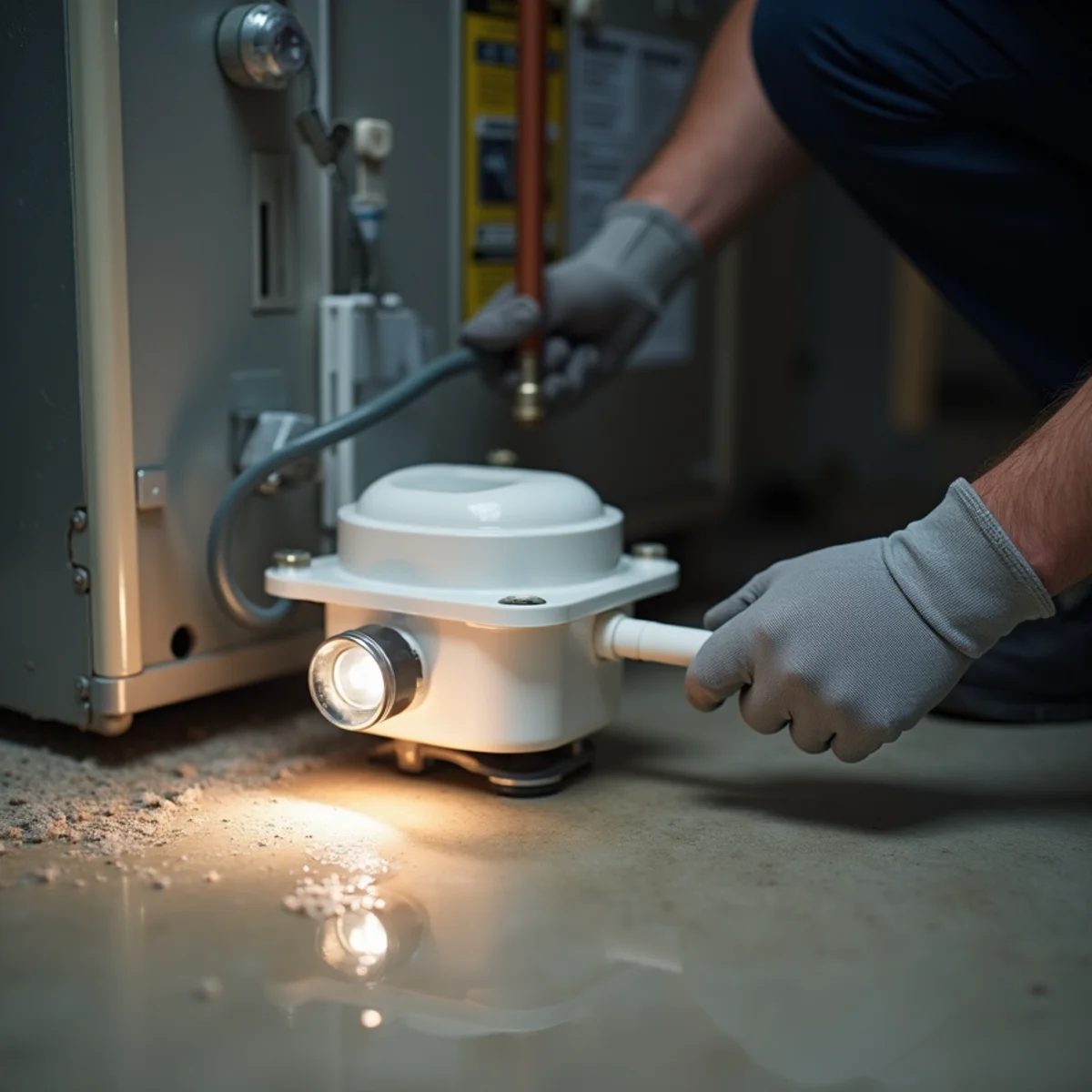
- Condensate drain. Look for water on the floor, a tripped condensate pump or a drain line that runs outside and may be frozen.
Give the furnace five minutes after each change. A short silent startup sequence before the burner lights is normal.
Checks 1 to 3: power and the signal to start
What a dead thermostat looks like
Battery thermostats in 1990s and 2000s Whitpain Township homes tend to fade rather than die: the display goes faint, then the heat stops answering. A smart thermostat stuck in an away or eco mode can hold the house at a setting you never chose.
Where the service switch hides
In finished basements it is often by the utility-room door, sometimes with a red cover plate. In older colonials it may be screwed to a joist above the furnace.
Checks 4 and 5: the filter and the blower door
A clogged filter makes the heat exchanger run hot until the high-limit switch cuts the burner. The furnace cools, relights and trips again. If it starts and stops every few minutes while the house keeps getting colder, suspect the filter first.
The blower door switch is the simplest fix on this list. Push the panel in and listen. If the furnace starts its sequence, that was the whole problem. Never tape, hold or wedge that switch down to make a furnace run with the cover off.
Checks 6 and 7: the high-efficiency furnace problems that come with a cold snap
Most furnaces installed in Blue Bell since the 1990s are 90%-plus condensing models. They vent through PVC pipes out a side wall instead of a metal flue, and they make water that drains to a floor drain or a small pump. Both details matter in January.
- Drifted snow. A low pipe on the side of the house can disappear under a drift or a pile thrown by the snow blower. Once the intake or exhaust is blocked, the furnace locks itself out.
- Frost at the exhaust. During single-digit nights, ice can build on the exhaust opening. Knock loose ice away gently from outside; do not pull the pipe apart.
- Frozen condensate. Drain lines that run through a garage or out an exterior wall freeze first. A pressure switch then stops the furnace because water cannot leave. A technician thaws the line and usually reroutes or insulates it so it does not freeze again.
Older 80% furnaces vent through a metal pipe into a chimney and skip both of these problems, which is one quick way to tell what you have.
When to stop checking and make the call
Stop and call if any of these show up, or if all seven checks look fine and the house is still cooling off:
- The furnace clicks or tries to light several times, then goes quiet.
- A burning, electrical or sharp metallic smell comes from the furnace or the vents.
- The breaker trips a second time.
- Water keeps pooling under the cabinet after you have checked the drain.
- The status light on the furnace door blinks the same code over and over. Count the flashes through the small window and write the number down for the technician.
Those point to parts such as a flame sensor, igniter, inducer motor or control board, which is furnace repair work for a technician. If it is late at night and the temperature is dropping fast, treat it as an after-hours heating emergency. The phone is answered 24/7, the nearest available technician is sent, and the price is given before work starts. For what moves that price, see what drives furnace and AC repair costs in Blue Bell.
If your house heats with oil or a heat pump
Oil furnaces add one check: the tank gauge. If the burner has locked out, press the reset button once at most, because repeated presses can flood the chamber with oil. Heat pump owners have a different list; start with why a heat pump blows cold air in winter.
From the field: what a technician looks at first
Before touching a tool, a good technician reads what the furnace is already saying. Most furnaces built since the 1990s have a small window in the lower door with a blinking LED on the control board. The pattern is a fault code: a few blinks for a pressure-switch problem, a different count for a failed ignition or a tripped limit. The chart is printed on the inside of the door.
- Count the blinks before you do anything else, and take a short phone video. Switching power off and on clears the code and the lockout, which erases the best clue.
- Do not keep cycling the power. Many boards lock the furnace out for about an hour after three failed ignition attempts. Repeated resets just restart that clock.
- Older furnaces may have a standing pilot. If yours dates from before the 1990s and the pilot is out, relight it only by following the instructions on the furnace label, and only if there is no smell of gas. If it will not stay lit, the thermocouple is the usual cause, and that is a call.
- The flame sensor is the part technicians replace or clean most often on no-heat calls with high-efficiency furnaces. It is a five-minute fix with the right tools, but it involves opening the burner compartment, so it belongs to the technician.
Keeping the house safe while you wait
Close doors to rooms you are not using and keep the family in one space. Open the cabinet doors under sinks on outside walls and let a faucet drip if the forecast is in the teens. Use only electric space heaters with tip-over shutoff, plugged straight into the wall, and never heat the house with a gas oven or a grill.
Landlords take note: in older twins and rowhomes like those in Norristown, pipes on exterior walls freeze faster than in a newer Blue Bell colonial. Tell tenants to make these same moves while help is on the way.
The bottom line
Seven checks, about ten minutes, no tools and no panels opened. If the thermostat, breaker, service switch, filter, blower door, PVC vents and condensate drain all check out and the furnace still will not heat, the problem is inside the furnace. That is the point to stop and call. Note the blink code, keep the house safe with the steps above, and let a technician test the ignition sequence. In Blue Bell and the towns around it, a technician is a phone call away at any hour, with the price given before any repair.
Questions readers ask
My furnace lights and then shuts off right away. What causes that?
The burner lights, then the control board shuts the gas off because it cannot confirm a flame. The usual cause is a dirty flame sensor, a thin metal rod that a technician can clean or replace in a short visit. A blocked PVC vent or a frozen condensate line can cause a similar pattern on high-efficiency furnaces, because a pressure switch stops the sequence before or right after ignition. If the furnace tries three or four times and then goes quiet, it has locked itself out. Note the status light code and call.
Should I call the gas company or an HVAC technician when the furnace will not light?
If you smell gas, leave the house and call 911 and PECO's gas emergency line from outside. If there is no gas smell, check whether your gas stove or water heater still works. If they do, the gas supply is fine and the problem is inside the furnace, which is a job for an HVAC technician. If nothing gas-fired in the house works, the supply itself may be off, and PECO is the right first call.
Why is there a light blinking inside my furnace?
That is the control board reporting a fault code. Count the blinks through the small window in the lower door, then compare the pattern to the chart printed inside the door panel. Common codes point to the pressure switch, the igniter or flame sensing, or a tripped limit. Write the code down or film it before resetting power, because a reset clears it, and give it to the technician when you call.