The cost of an AC or furnace repair in Blue Bell comes down to six things: the diagnostic visit, which part failed, the refrigerant your system uses, how hard the equipment is to reach, when the work happens, and whether the part is still under warranty. A capacitor swap on an accessible condenser sits at one end.
A compressor or a cracked heat exchanger on an out-of-warranty system sits at the other, close enough to replacement that the conversation changes.
This page skips price lists on purpose. Any number printed online is a guess about a system nobody has seen. What you can know in advance is what each factor does to the bill.
The diagnostic visit comes first
Every repair starts with a technician finding the fault. That visit covers the drive, the time to test the system and, often, a short written finding. Some contractors credit it toward the repair if you approve the work; others charge it separately either way. Ask which applies before anyone comes out.
Diagnosis is fast when the symptom is clear, such as a condenser that hums but will not start. It takes longer when a fault comes and goes, like a furnace that locks out only on the coldest nights. Intermittent problems cost more to find, not because anyone is padding the bill but because the technician has to catch them happening.
Which part failed is the biggest swing
Parts fall into rough tiers. The table compares them by relative cost and effort, from the small electrical parts that fail most in July to the major components that make you weigh replacement.
| Part or repair | System | Relative cost | Why |
|---|---|---|---|
| Capacitor or contactor | AC, heat pump | Low | Inexpensive part, quick swap at the outdoor unit |
| Flame sensor or igniter | Gas furnace | Low | Small part, short visit |
| Clogged condensate drain or pump | AC, furnace | Low to moderate | Labor depends on where the line runs |
| Inducer or blower motor | Furnace, air handler | Moderate | Larger part, more labor, sometimes ordered |
| Control board | Furnace, air handler | Moderate to high | Brand-specific part, may need ordering |
| Refrigerant leak search and recharge | AC, heat pump | High, varies by refrigerant | Finding the leak takes time; refrigerant is billed by the pound |
| Compressor or evaporator coil | AC, heat pump | Major | Expensive part, refrigerant recovery and recharge |
| Heat exchanger | Gas furnace | Major | Often near the cost of a new furnace |
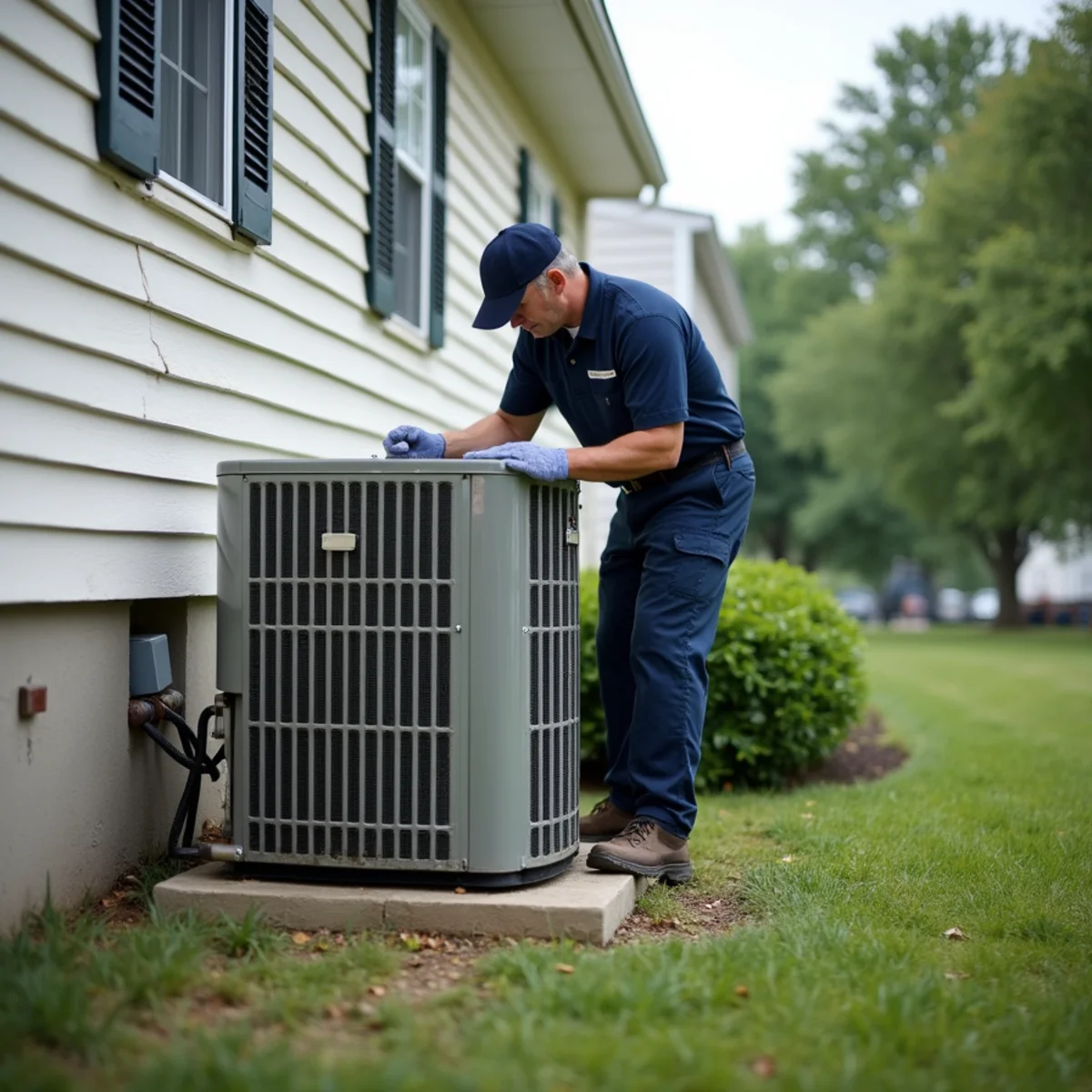
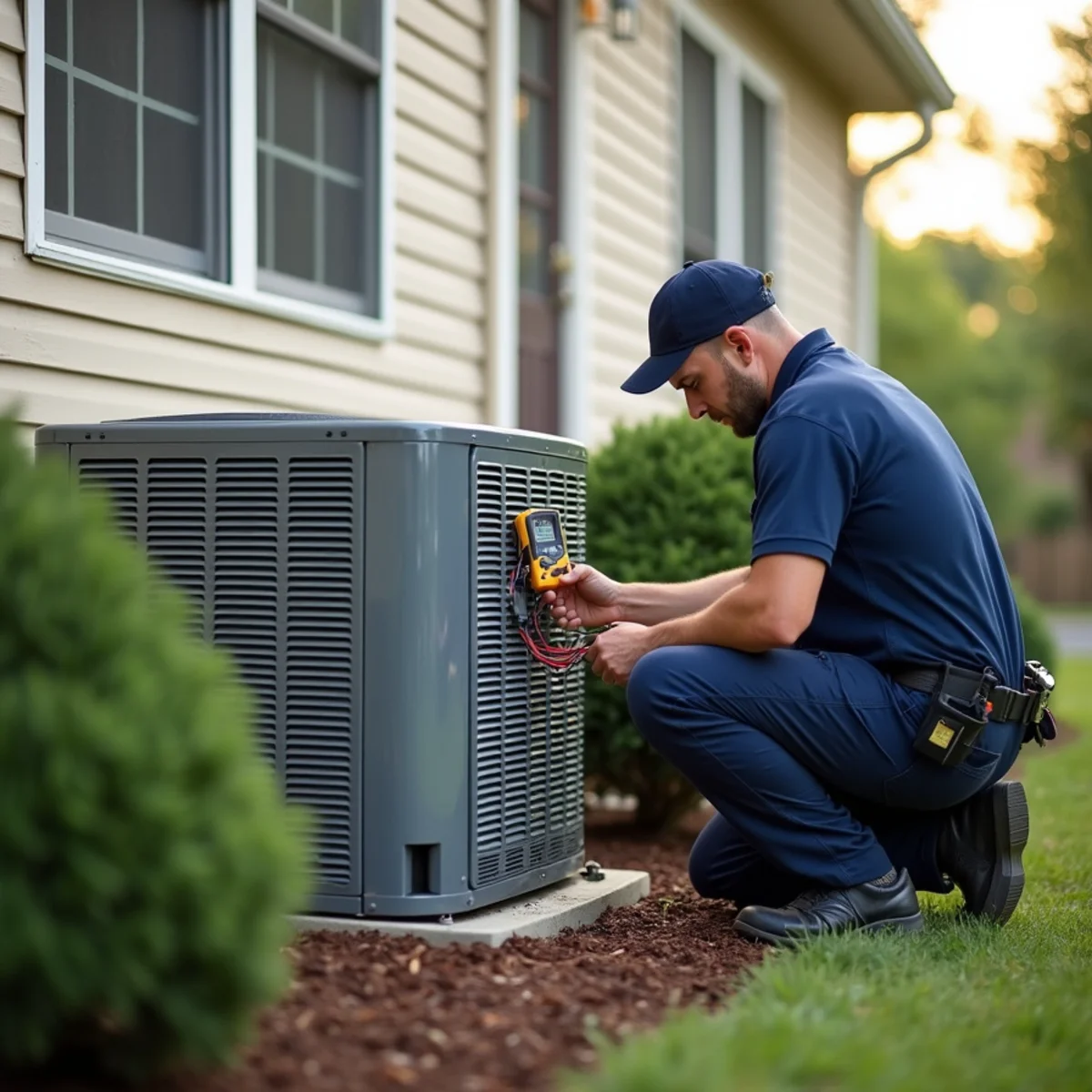
Most July calls in Whitpain Township land in the top rows. Humid stretches in the 90s cook capacitors and contactors on condensers that have been running since the 2000s, and those are among the cheaper fixes on an AC repair visit.
Refrigerant: R-22, R-410A and R-454B
Any repair that opens the refrigerant circuit is priced partly by what is inside it. Look at the data plate on the outdoor unit to see which one you have.
- R-22. Production ended in 2020, so these systems run only on reclaimed or stockpiled refrigerant. Recharging is costly, and a leak on an R-22 system is usually the signal to plan replacement.
- R-410A. The standard from the mid-2000s until recently. Existing systems can still be serviced and repaired, but supply is being phased down and the price per pound is rising.
- R-454B and R-32. The refrigerants in new systems since the 2025 to 2026 changeover. They are mildly flammable, so technicians follow updated handling and leak-detection rules. Repairs on these newer systems are often still under parts warranty.
If a leak repair is on the table for an older R-22 or early R-410A system, read whether to repair or replace a 15-year-old AC before you approve it.
Access, timing and the house itself
Where the equipment sits
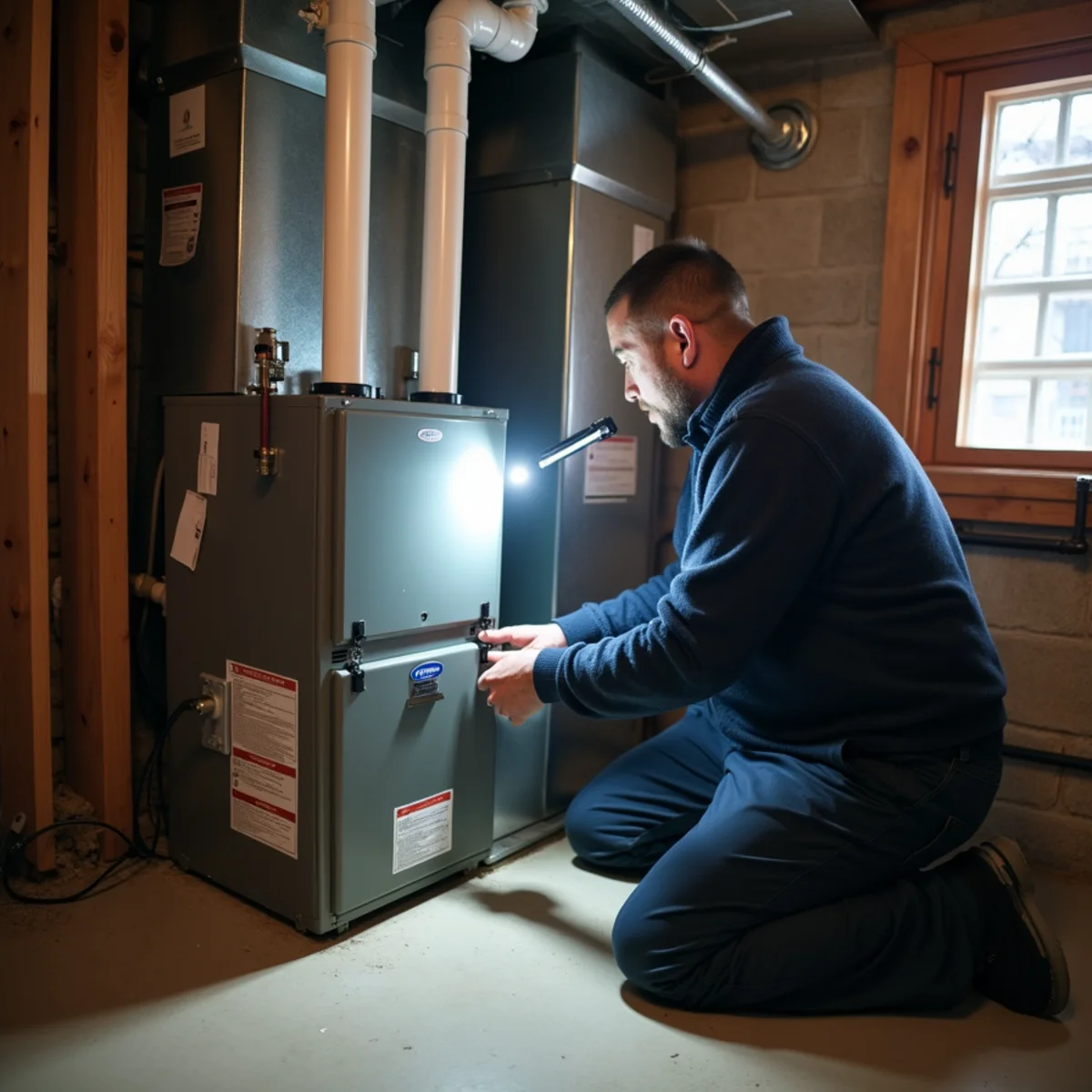
A furnace in an open basement is the easy case. Attic air handlers in larger 1990s and 2000s homes around Blue Bell Country Club mean summer heat, tight crawl space and parts carried up a pull-down ladder. Townhome closet air handlers leave little room to work, and a blower or coil swap can mean pulling the unit partway out. Cramped basements in older Ambler twins and stone houses add time too. More time means more labor on the bill.
When the work happens
Nights, weekends and holidays usually carry after-hours rates. If the house is safe and the weather is mild, scheduling for the next weekday can cost less. If the heat is out in a January cold snap, waiting is not a real option, and that is what after-hours service is for.
Warranty status and system age
Many manufacturers cover parts for several years, often longer when the equipment was registered after installation. A covered part still involves labor, and warranty parts can take longer to arrive. Have the install date and model number handy when you call; the technician can check coverage.
Age changes the math in a different way. A small repair on a five-year-old system is an easy yes. The same repair on a system past 15 years deserves a second thought, because the next part to fail is already waiting.
How to read a repair quote
A useful quote tells you exactly what you are buying. Check that it lists:
- The diagnosis in plain words: what failed and how the technician confirmed it.
- The part by name, and whether it is an original-manufacturer part or a universal replacement.
- Labor, either as a flat repair price or as time at a stated rate.
- Refrigerant, if any, with the type and amount.
- Any after-hours, permit or disposal charges, shown as separate lines.
- What is not included, such as a second problem the technician noticed but did not price.
What to ask before you say yes
- Is this the cause, or a part that might fix it?
- Is the part on the truck, or does it need to be ordered?
- Is the part under manufacturer warranty, and does the contractor warranty the labor?
- What else did you see that is likely to fail soon?
- At this system's age, would you repair it in your own house?
That last question gets an honest answer more often than you would expect. For furnace repair in particular, ask the technician to show you the failed part or the reading that confirmed it.
From the field: why two quotes for the same problem can differ
Homeowners sometimes get two very different numbers for what sounds like the same repair. Usually the quotes are describing different jobs. These are the patterns technicians see most:
- A symptom quoted as a diagnosis. "AC not cooling" can be a capacitor or a compressor. A quote written before the failure was tested is a guess with a number on it.
- Refrigerant added without finding the leak. A recharge with no leak search is cheaper today and repeats next summer. Ask whether the quote includes locating the leak.
- Original parts versus universal parts. A manufacturer control board and a universal replacement can both work, at different prices and warranties. The quote should say which.
- Age and parts availability. On systems past 12 to 15 years, some parts are discontinued or slow to source, which adds labor and sometimes a second trip.
- Labor is a large share of most bills. Time to reach an attic air handler or a crawlspace furnace moves the total more than people expect.
- Add-ons bundled in. Hard-start kits, surge protectors and duct cleaning may be useful, but they are separate decisions and should be itemized.
Why a price before work starts matters
Open-ended hourly billing puts the risk on you: a stubborn part or a slow afternoon shows up on your invoice. A price agreed before work starts puts that risk on the contractor and lets you say no, get a second opinion or ask about replacement first.
That is the policy on every call through Your Comfort Air Solutions. The technician we send diagnoses the problem, explains it and gives you the price before any repair begins. If you decide replacement makes more sense, check PECO rebates on new equipment before you buy.
The bottom line
A fair repair price in Blue Bell starts with a tested diagnosis, names the failed part and the refrigerant involved, accounts for access and timing, and is given to you before any work starts. Compare quotes line by line, not by the bottom number. If a repair would cost a large share of a new system on equipment that is 15 years old or on R-22, it is worth knowing what a properly sized replacement involves before you decide.
Questions readers ask
Why is HVAC repair more expensive at night or on a weekend?
After-hours calls pull a technician out at times most contractors pay a premium for, so nights, weekends and holidays usually carry a higher rate than a weekday visit. The repair itself does not change. If the house is safe, the weather is mild and nobody at home is vulnerable to heat or cold, booking the next weekday slot can be the cheaper choice. If the heat is out on a freezing night, the after-hours visit is worth it.
Is it worth paying for a diagnosis if I might replace the system anyway?
Usually, yes. The diagnosis tells you whether the problem is a small part or a major component, and that answer is what the replace decision should rest on. A 14-year-old AC with a failed capacitor may have years left, while the same unit with a leaking R-22 coil probably does not. Without a diagnosis you risk replacing a system that only needed a simple fix, or pouring money into one that was already done.
Will a technician give me a price before starting the repair?
Yes. Every call through Your Comfort Air Solutions works the same way: the technician diagnoses the fault, explains what failed and gives you the price before any work begins. You can approve it, ask questions or decline. Nothing gets replaced on a guess, and you are not committed to anything by letting the technician look at the system.