Almost every house in Whitpain Township has one room the central system can't keep up with. In the 1990s homes around Blue Bell Country Club it is often the bonus room over the garage, at the end of the longest duct run. In older colonials it is a sunroom or addition that was never tied in. A mini-split fixes that room on its own, with its own outdoor unit and its own controls.
Your Comfort Air Solutions answers 24/7 and lines up an independent local installer for new systems, or a service technician for units you already own. Every HVAC technician we send is licensed where Pennsylvania requires it, and insured, and the price comes before the work.
Where a mini-split makes sense: additions, sunrooms, finished basements, rooms over the garage
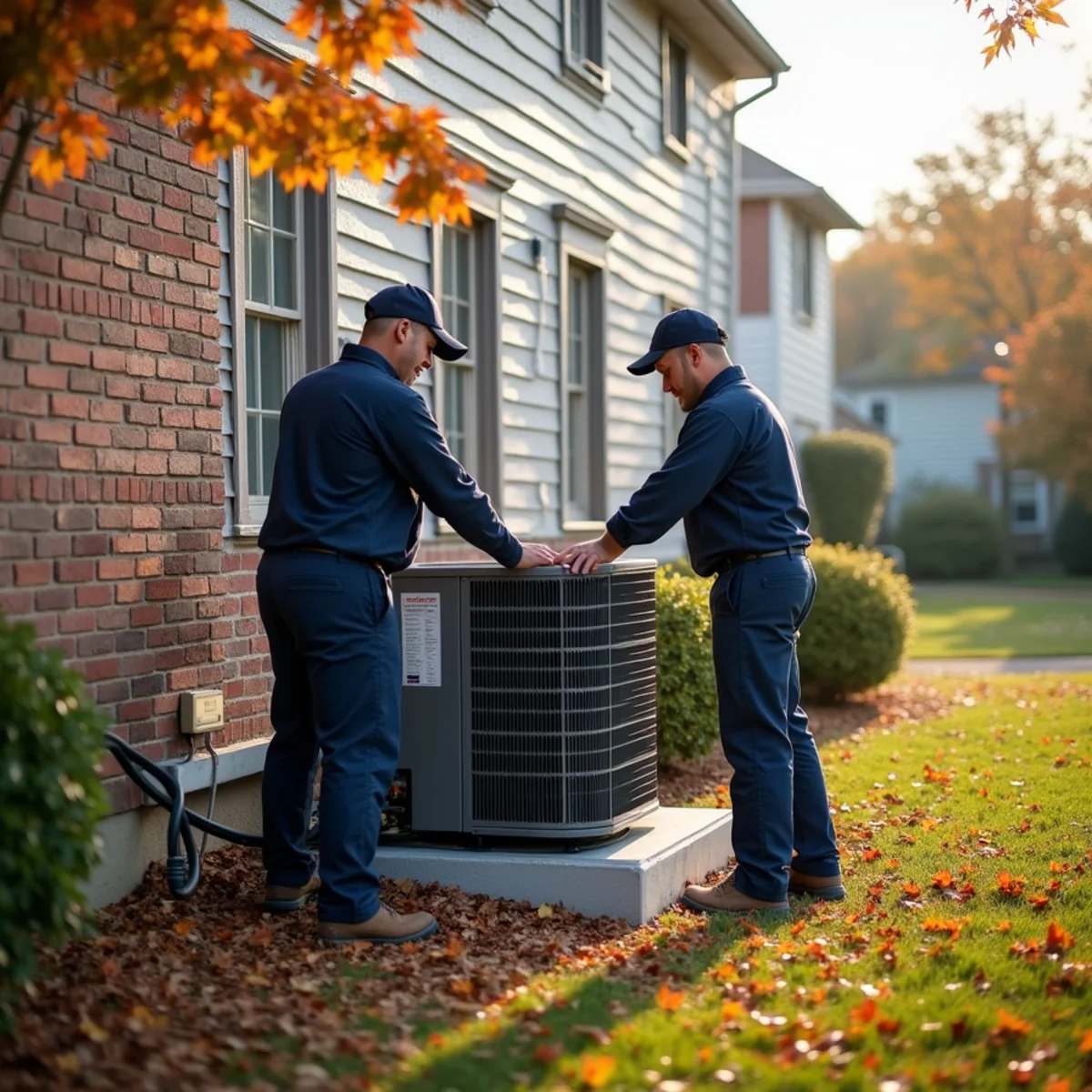
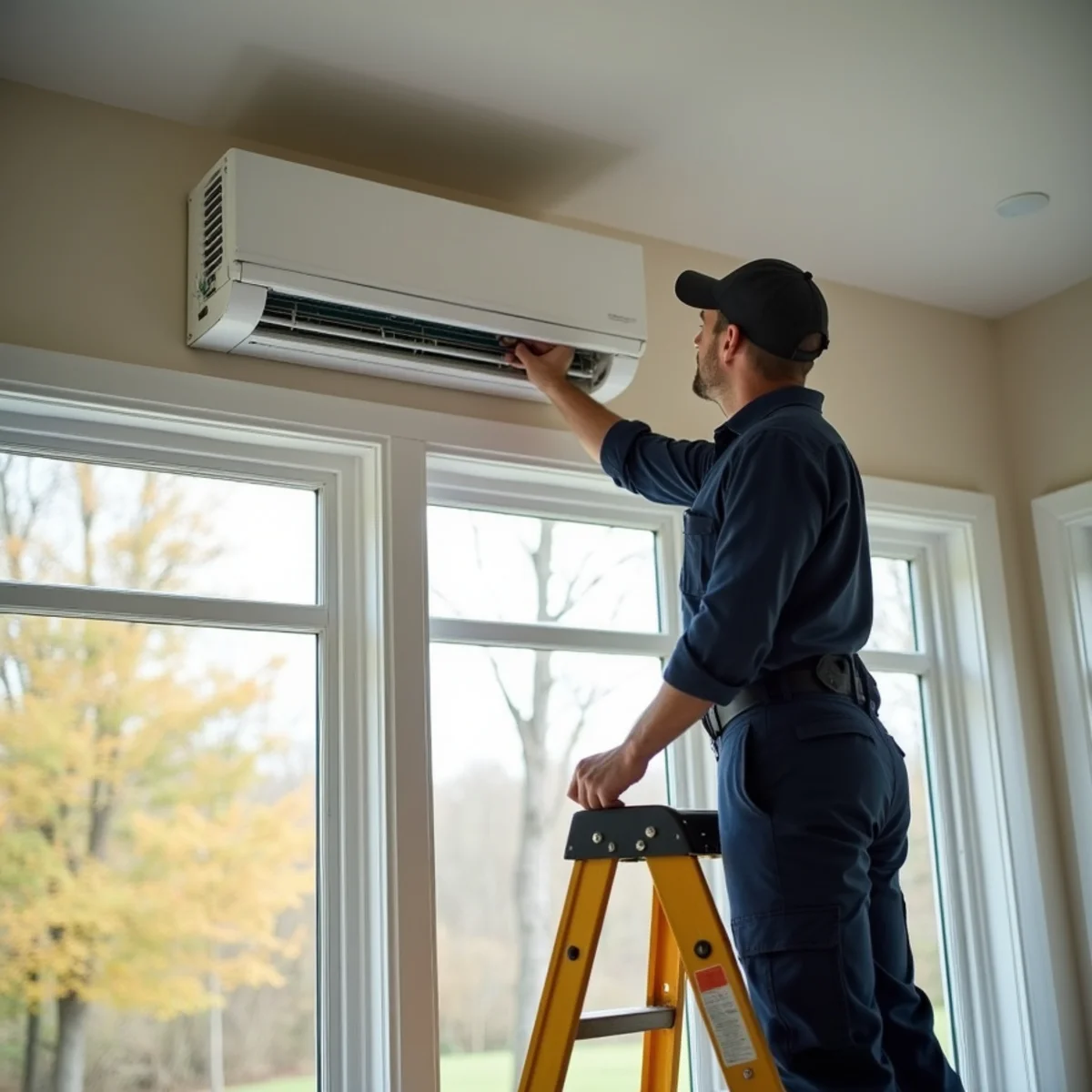
A mini-split is a heat pump in two pieces, joined by copper refrigerant lines, a drain and a control cable. The outdoor unit holds the compressor; the indoor head hangs high on a wall, sits in the ceiling or hides in an attic.
- Rooms over the garage: three outside walls, a cold slab below and a long duct run make these the hottest rooms in many Blue Bell houses.
- Additions and sunrooms: extending ducts often leaves the existing furnace and AC undersized for the bigger house.
- Finished basements: a head cools and pulls out summer dampness.
- Third floors and converted attics, where window units otherwise sit all summer.
Signs a mini-split is the right fix, and signs yours needs repair
Signs a ductless system makes sense
- A room that never matches the rest of the house: the bonus room over the garage, a sunroom, a third floor
- An addition or finished basement the original ductwork was never sized to reach
- A radiator-heated house where window units are the only cooling
- A space heater running all winter in one room
Signs your mini-split needs repair
- A blinking light or error code on the indoor head or remote
- Water dripping from the indoor head onto the wall or floor
- Ice on the copper lines at the outdoor unit
- A musty smell when it starts, or airflow that has weakened over a season
- The indoor fan runs but the outdoor unit never starts
Cooling a radiator-heated house without adding ductwork
Radiator houses were built before anyone planned for ducts, and running them through plaster walls in a twin or rowhome is disruptive and often impossible. That is why so many homes in Glenside, Ambler and Norristown still cool with window units.
The usual layout is one multi-zone outdoor unit at the side or rear, with a head in the main living space and one in each bedroom that matters. Where the attic has room, a concealed ducted air handler can serve three or four bedrooms through short runs, with nothing on the walls. The radiators stay. The boiler carries winter, and the mini-split covers summer and the mild shoulder days. Our guide on cooling a radiator house without ductwork compares every option, and if the boiler needs attention, see boiler repair.

Single-zone vs multi-zone systems
| Item | Single-zone | Multi-zone |
|---|---|---|
| Setup | One outdoor unit, one head | One outdoor unit, two to five or more heads |
| Best for | An addition, bonus room or basement | Several rooms in a house without ducts |
| Efficiency | Usually highest | Lower when one small room calls alone |
| If the outdoor unit fails | One room is affected | Every connected room is |
Two rooms on opposite ends of the house are often better served by two single-zone units than one multi-zone with long line runs. Each head is sized from a room load calculation. One that is too big for a small bedroom cycles on and off, never dries the air and leaves the room clammy.
Mini-splits as heat: cold-climate models in a Pennsylvania winter
Every mini-split heats, because it is a heat pump. The question is how far into winter. Standard models fade as the temperature drops toward the teens. Cold-climate models with variable-speed inverter compressors are rated to deliver most of their heat at 5°F, which covers nearly every night around Blue Bell, so one can be the main heat for an addition.
- The outdoor unit should sit on a stand or wall bracket above the snow line.
- Defrost pauses, with steam rising off the outdoor unit, are normal.
- A base pan heater keeps meltwater from refreezing inside the unit.
The winter behavior matches a central system; for those faults see heat pump repair.
Installation day: line set, condensate drain, electrical, wall or ceiling units
A single zone usually takes a day; three or four zones in a finished house take two or three.
- Layout: head and outdoor unit spots checked against studs, the drain path and the line route.
- Mounting: the back plate goes up with a slight fall toward the drain, and a three-inch hole is cored through the wall, sloped outward. Stone and plaster take longer than siding.
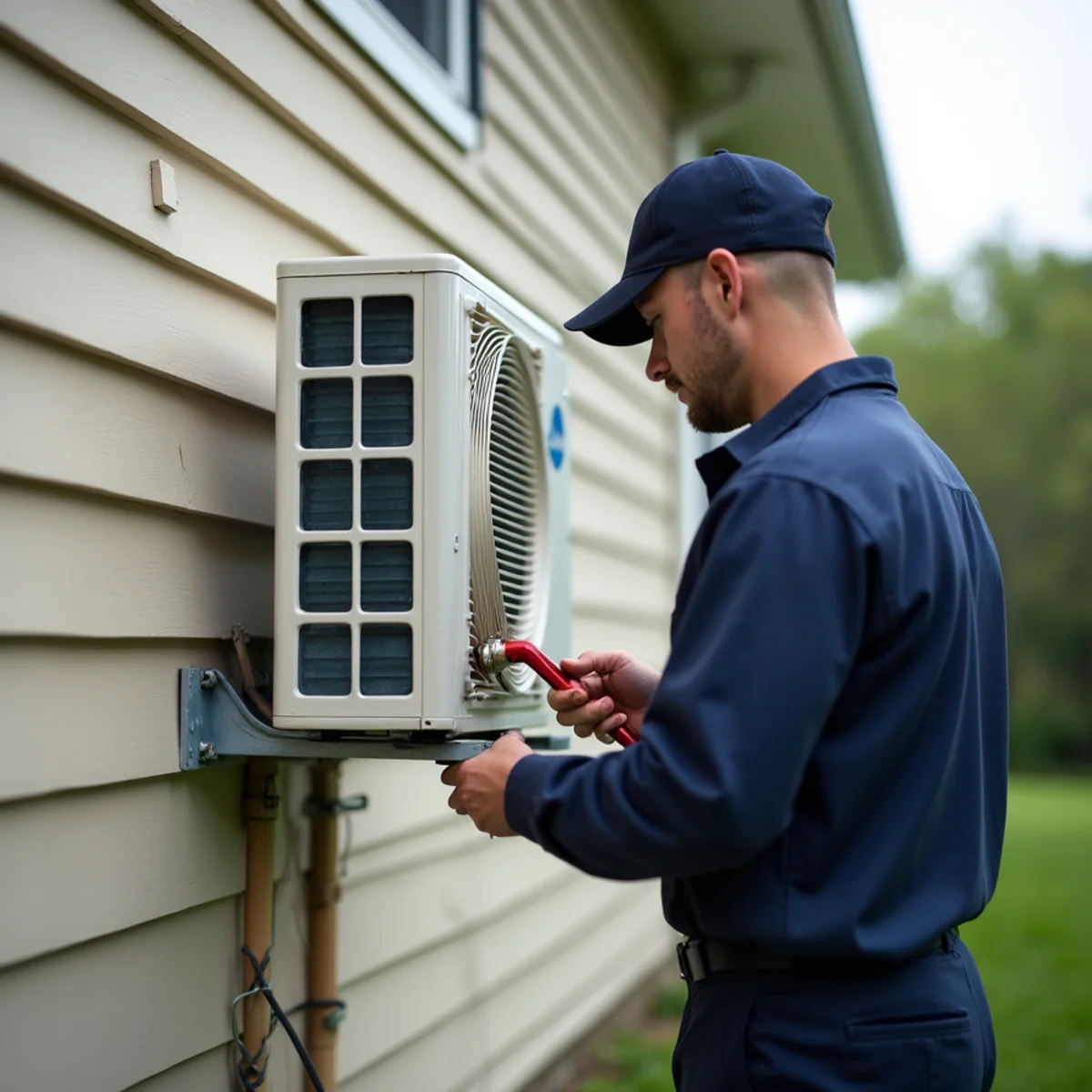
- Line set: refrigerant lines, drain hose and communication cable run outside, usually inside a paintable line-set cover.
- Flares: each flare fitting is made fresh and tightened with a torque wrench, since a bad flare is the top source of later leaks.
- Testing: nitrogen pressure test, then a vacuum pump runs until a micron gauge shows the lines are dry and holding.
- Drain: gravity to the outside, or a small condensate pump for heads on interior walls or in basements.
- Electrical: a dedicated circuit, a disconnect at the outdoor unit and control wiring. Full or 100-amp panels in older houses may need work first.
- Startup: factory charge released, extra refrigerant added for long runs, each head tested in heat and cool.
Expect a permit; the contractor handles it, and you can confirm with your township.
What's included in a ductless installation
- A room-by-room load estimate so each indoor head is sized to its space, not to the biggest unit on the truck
- Head placement agreed with you, including where the line set runs and where the condensate drains
- Outdoor unit on a pad or wall bracket, placed to meet any townhome or condo association rules
- Line set, drain line and communication wiring, with a line-set cover where it runs on the outside wall
- Dedicated electrical circuit and disconnect, with panel capacity checked first
- Pressure test, vacuum to manufacturer spec and startup in heating and cooling mode
- Remote or wall controller setup, filter cleaning instructions and warranty registration
Mini-split repair and cleaning: leaks, error codes, dirty coils
Most units report faults with a blinking light pattern or a code. Write it down before you call.
- Refrigerant leaks, usually at a flare, show up as weak output and frost on the outdoor service valves. It gets fixed, tested and evacuated before any recharge.
- Water dripping from the head: a clogged drain, a failed condensate pump or a head mounted out of level.
- Musty smell or black specks from mold and dust on the blower wheel and coil.
- Communication errors from wiring faults, a failed board or a power surge.
Washing the filters behind the front panel is a homeowner job. A professional deep clean wraps the head in a drain bag, cleans and rinses the coil and blower wheel, and flushes the drain line.
Townhome and condo association rules for outdoor units
Blue Bell Country Club, Blue Bell Woods, Whitpain Hills and Whitpain Farm all have homeowner associations, so read the rules before an outdoor unit goes up. Common requirements include architectural review approval, placement at the side or rear, line-set covers painted to match, and limits on wall brackets along shared walls, where vibration carries next door. In a condo, the exterior wall is usually common property, so core drilling needs written permission.
What affects the installed cost, and PECO rebates
- Number of zones, and single-zone units versus one multi-zone
- Head type: wall-mounted, ceiling cassette or concealed ducted
- A cold-climate rating if the system has to heat
- Line set length and route, and wall construction
- Electrical work, condensate pumps, brackets and covers
PECO's Smart Ideas program has offered rebates on qualifying high-efficiency equipment. Amounts and deadlines change, so check PECO's current program page before you buy; the contractor can confirm eligibility. The federal 25C tax credit ended December 31, 2025, and most of Lansdale borough buys power from Lansdale Electric, where PECO electric rebates may not apply. More in our PECO rebates guide. Prices for jobs across the Blue Bell service area are given before any work starts.
Why Blue Bell homeowners call Your Comfort Air Solutions for ductless work
- Installers who size each zone. A head that is too big for a bedroom short-cycles and leaves it clammy. Each one should be sized to its room.
- Honest fit advice. Sometimes a small-duct system, an attic air handler or a fix to existing ductwork is the better answer, and you will hear that.
- Repairs as well as installs. Error codes, leaks and dirty coils on existing mini-splits get the same 24/7 answering as any other call.
- The price in writing before work starts, with the line items above listed.
- Licensed where Pennsylvania requires it, and insured, for every HVAC technician and installer we send.
Ductless installs around Blue Bell and the older boroughs nearby
In Blue Bell itself, most ductless jobs are additions, sunrooms and finished basements in 1980s to 2000s homes. The radiator-heated boroughs nearby are where ductless does its biggest work: Victorian twins in Ambler, stone and stucco homes in Glenside, and older houses a few blocks from State Street in Media.
Historic-district rowhomes in Phoenixville are another common fit, where running ducts through brick party walls is not practical. Every town we cover is on the service areas page.
Ductless Mini-Splits questions from Blue Bell homeowners
How many indoor units do I need?
Start with one per room or open area you want to control. An open kitchen and family room can usually share a head; bedrooms with closed doors each need their own, or a concealed ducted unit in the attic serving several. A room-by-room load calculation sets the size of each head and shows whether one multi-zone or separate single-zone outdoor units fit better.
Can a mini-split heat a room through a Pennsylvania winter?
Yes, if it is a cold-climate model sized for the room. These are rated to deliver most of their heat at 5°F and keep running below that, which covers nearly every winter night around Blue Bell. Standard models lose capacity in the teens. Mount the outdoor unit above the snow line and expect short defrost pauses. For a whole house, most owners keep the boiler or furnace as backup.
Is ductless cheaper than adding ductwork to an older house?
Usually, in a house with no ducts at all. Adding central air to a radiator-heated twin or colonial means building ducts through finished walls and ceilings, adding an air handler and patching plaster. A mini-split needs one small hole per head. Where an open attic reaches every bedroom, a ducted system can compete, and the installer can price both on your house before any work starts.
How often does a mini-split need cleaning?
Rinse the washable filters every two to four weeks during heavy use and monthly otherwise. A professional deep clean of the coil, blower wheel and drain is worth doing about once a year for heads that run most of the year, and every other year for lightly used rooms. A musty smell at startup, black specks on the vanes or water dripping from the head all mean it is overdue.
How long does a ductless mini-split last?
With yearly cleaning, a quality mini-split typically lasts 12 to 15 years or more, similar to a heat pump, since it runs in both seasons. Neglect shortens that fast: dirty indoor coils and blower wheels strain the system, and a clogged drain line can damage the wall below the head. Keeping the filters rinsed and booking a professional cleaning every year or two makes the biggest difference.
Can one mini-split cool a whole house?
Usually not well. A single wall head cools the room it is in and the open space around it, but doors, hallways and stairs block the air from reaching bedrooms. Whole-house ductless means a multi-zone system with a head in each main room, or a mix of ductless for some rooms and a small-duct or attic air handler for the rest. The installer should lay it out room by room.