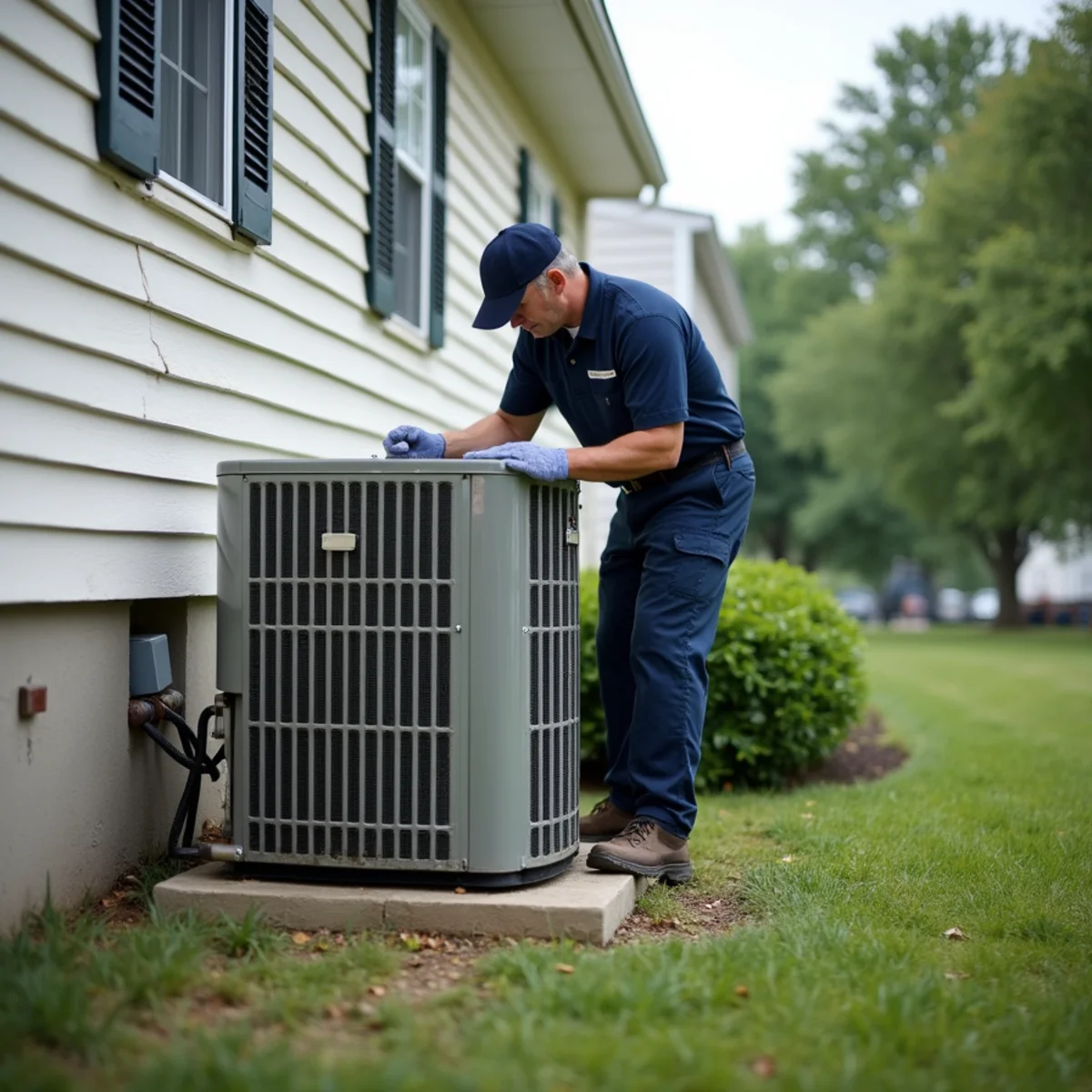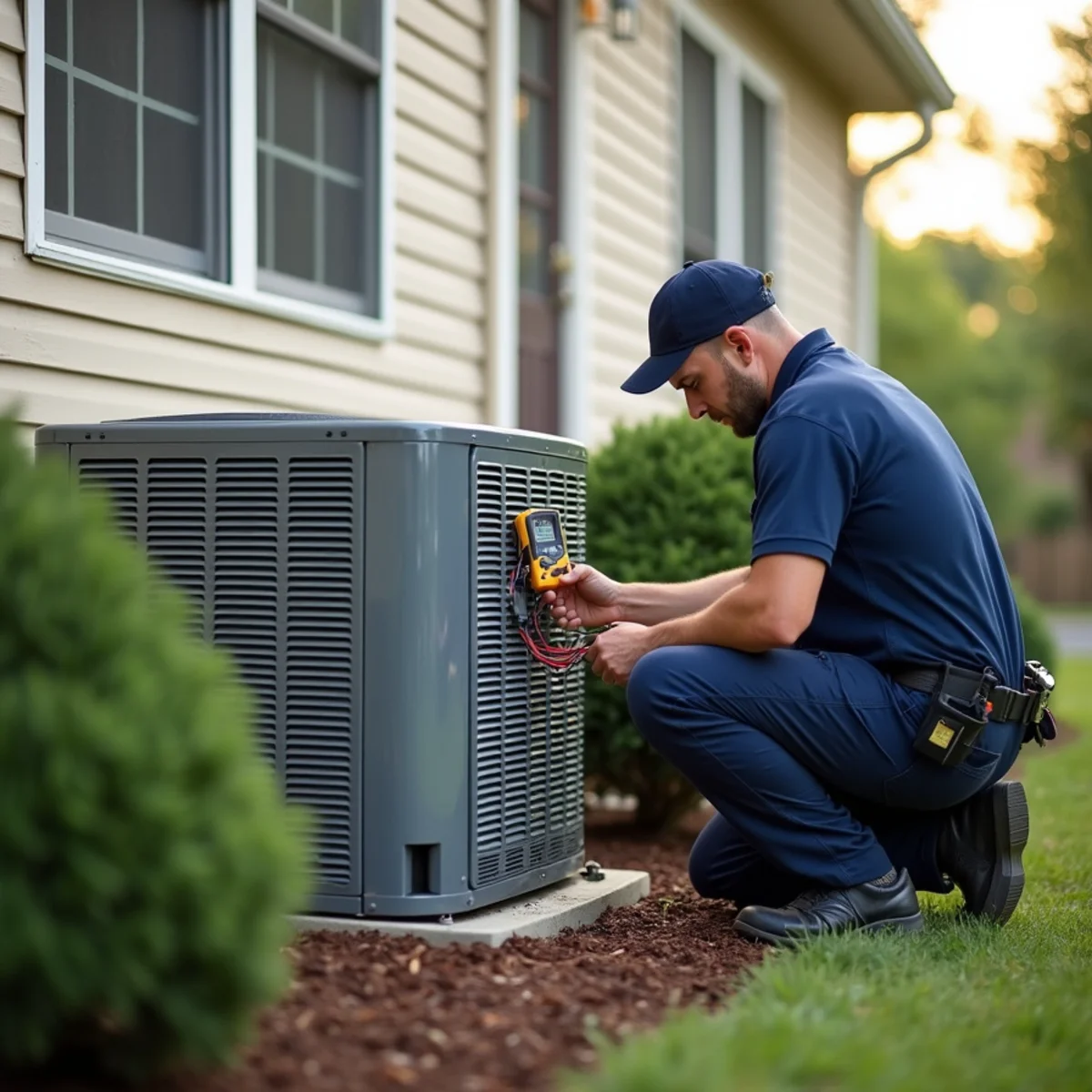

Most AC failures in Blue Bell are not mysteries. A run capacitor swells after a week of 90-degree days, a condensate drain clogs and trips the float switch, or a coil slowly losing refrigerant finally ices over. The fix is usually one part, as long as somebody tests the system instead of guessing.
Your Comfort Air Solutions answers 24/7 and dispatches independent local HVAC contractors across zip 19422 and Whitpain Township, including Center Square, Broad Axe, Belfry and West Ambler. Every HVAC technician we send is licensed where Pennsylvania requires it, and insured. If your outdoor unit also heats the house, see heat pump repair instead.
AC problems we fix in Blue Bell homes
Local central air falls into three groups, and the group tells the technician where to look first:
- 1960s and 1970s colonials with ductwork added later, long undersized runs to the bedrooms and a coil sitting on a basement furnace.
- 1992 to 2005 builder homes, Blue Bell Country Club estate homes among them, often with two zones and two condensers.
- Townhomes and carriage homes in Blue Bell Woods, Whitpain Hills and Whitpain Farm, with the condenser in a narrow side yard and the coil in an attic or closet.
The same calls come from across our service areas, from Norristown twins to Glenside houses where central air was fitted around radiators.
Not cooling, short cycling, frozen coil, water at the air handler: what each symptom means
| Symptom | Likely cause | What to do now |
|---|---|---|
| Outdoor unit hums, fan still | Failed capacitor or seized fan motor | Turn cooling off so the compressor does not overheat |
| Vents blow room-temperature air | Condenser not running, or low refrigerant | Reset a tripped breaker once; if it trips again, leave it |
| Ice on the copper line or coil | Dirty filter, weak blower or low charge | Cooling off, fan On, change a dirty filter |
| Runs a few minutes, stops, repeats | Oversized unit, weak capacitor or low charge | Time a few cycles for the technician |
| Water at the indoor unit or a ceiling stain | Clogged condensate drain or cracked pan | Shut cooling off and put towels down |
| Upstairs warm, downstairs cold | Duct layout, closed dampers or too few returns | Open every register and clear the return grilles |
Never chip ice off a coil. Let it thaw for several hours with the blower running. If it freezes again within a day, the cause is still there.
The parts that fail first: capacitors, contactors, fan motors, clogged condensate drains
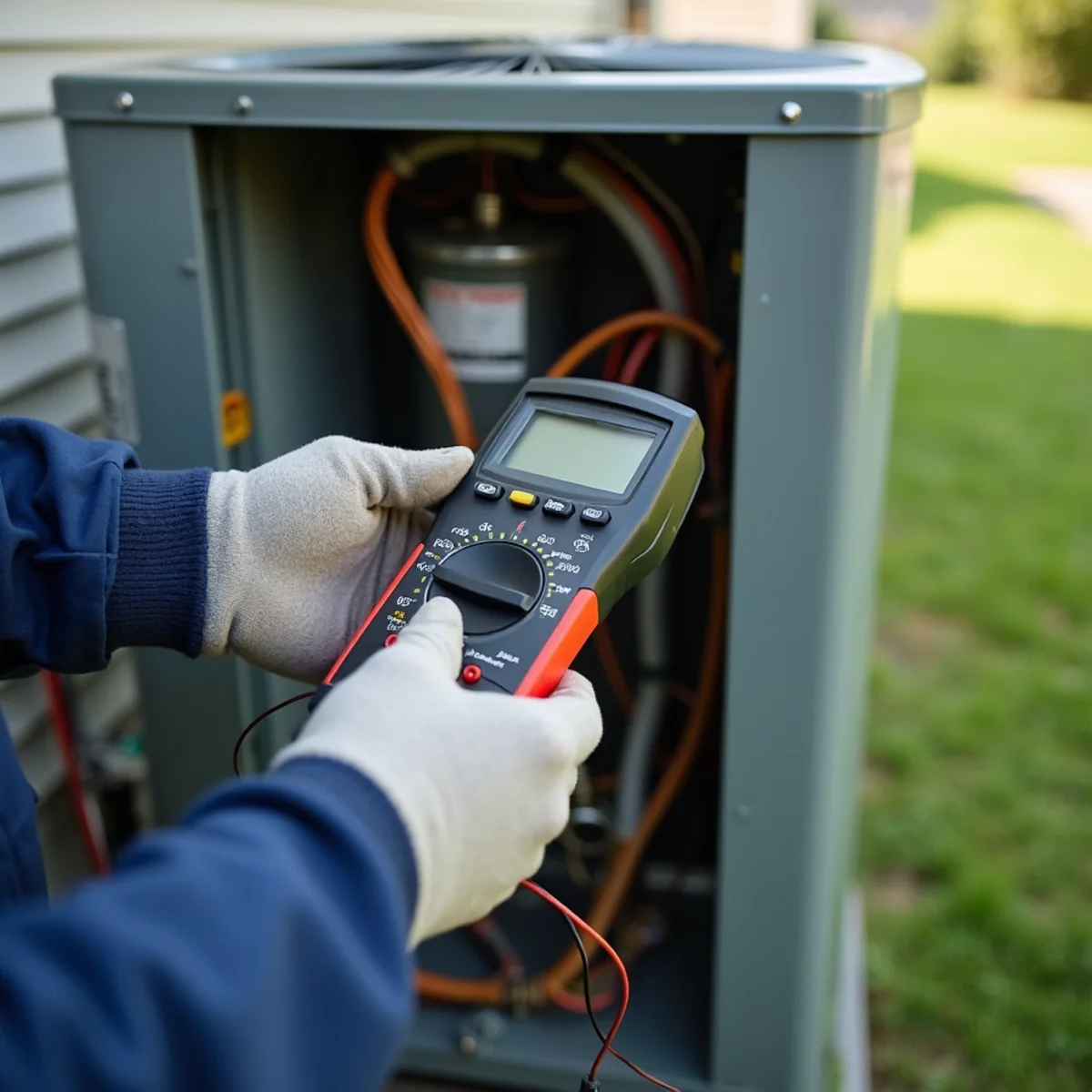
Capacitors give the compressor and fan the kick to start, and heat kills them. A condenser on a south-facing patio pad lives in far hotter air than the forecast. The technician measures microfarads against the printed rating rather than swapping parts on a hunch.
Contactors pit and burn with every start, and ants nest in the warm housing. Fan motors lose their bearings; outside that starves the condenser of air, inside a slow blower freezes the coil.
Condensate drains carry gallons of water a day in humid weather through a small PVC line that grows algae. When it backs up, a float switch shuts everything off, which looks exactly like a dead AC.
Refrigerant leaks: old R-22 systems, R-410A systems and the new R-454B equipment
Refrigerant does not get used up. Low charge means a leak, usually at the indoor coil, a valve core, a brazed joint or a line set rubbed through at the wall. Topping off without finding it means buying the same refrigerant next summer.
- R-22 (before about 2010). Production ended in 2020, so every pound is reclaimed and priced accordingly. A leak usually means it is time to plan replacement.
- R-410A (about 2010 to 2025). Still fully serviceable and repairable, but supply is being phased down and prices will keep rising.
- R-454B and R-32 (new installs). Lower-GWP and mildly flammable (A2L), handled under updated rules. They cannot be mixed into an R-410A system.
Recovery, evacuation and recharging take gauges, a recovery machine and a vacuum pump. That is always the technician's job, never a homeowner project.
Why systems fail in July here: humid heat and 1990s-era equipment in townhome and carriage-home communities
Afternoons in the upper 80s and 90s keep a condenser running almost nonstop, while the humidity makes the coil wring out water as well as heat. A system that limped through June meets its limit in the second or third hot week of July.
Many carriage homes and townhomes in Blue Bell Country Club, Blue Bell Woods and Whitpain Farm got their current condensers between about 2006 and 2012, so they are 14 to 20 years old. Side-yard units also breathe their own hot exhaust. Keep two feet clear around yours and rinse the fins with a hose each spring, system off at the thermostat.
Larger 1990s homes have a different weak spot: a second-floor air handler and its ductwork sitting in an attic that bakes all afternoon. That is where overflowing drain pans, ceiling stains and weak upstairs airflow tend to start.

What a repair visit looks like, from call to cool air
- You call. A person answers and asks what the system is doing and how old it is.
- We dispatch the nearest available technician from the local contractors on our line.
- Diagnosis. Voltage, capacitor readings, contactor condition, compressor and fan amp draw, then refrigerant pressures checked by superheat or subcooling against the manufacturer's chart.
- Price before work. You hear what failed and what the fix costs, and nothing starts until you agree.
- Test run. The technician checks the temperature drop across the coil and confirms the drain flows.
Capacitors, contactors and drains are usually done in one visit. Motors and coils sometimes have to be ordered.
What's included in an AC repair visit
Every visit covers the whole cooling circuit, not just the part you suspect. That matters because one failure often hides a second one: a capacitor that died because a fan motor was dragging, or a frozen coil that traces back to a filter nobody could reach.
- Thermostat and low-voltage wiring. Confirms the call for cooling actually reaches the equipment.
- Electrical checks at the condenser. Capacitor microfarad reading against its rating, contactor points, disconnect and breaker.
- Outdoor coil and fan. Fin condition, cottonwood and grass buildup, fan blade and motor amperage.
- Refrigerant pressures, only when the readings call for it. Superheat and subcooling on R-22, R-410A or R-454B, handled under EPA Section 608 rules.
- Indoor coil, blower and filter. Airflow problems cause more frozen coils than refrigerant does.
- Condensate drain, pump and float switch. The usual reason an air handler shuts itself off on a humid day.
- Temperature split. The difference between return and supply air, measured before and after the repair.
- Written findings and the price before work starts, then a full test cycle once you approve the repair.
Repair or replace: when a 12 to 15-year-old condenser is not worth fixing
Signs that point toward replacement: an R-22 system with a leak, a failed compressor on a unit past about 12 years, a leaking coil on an equally old condenser, or refrigerant added two summers running. A capacitor on a 14-year-old unit is still worth fixing; a compressor rarely is.
Our guide to repairing or replacing a 15-year-old AC covers the refrigerant change in depth, and HVAC installation and replacement explains sizing a new system with an ACCA Manual J load calculation instead of copying the old label.
What affects the cost of an AC repair (and what a spring tune-up catches)
- The part. A capacitor and a compressor sit at opposite ends of the scale.
- Refrigerant. R-22 costs the most; R-410A is climbing.
- Access. An attic air handler over a finished second floor takes longer than a basement coil.
- Timing. Any after-hours rate is stated before anyone is sent.
- Warranty. Have the install date and model numbers handy; covered parts may mean labor only.
A spring tune-up catches most July failures early: a weak capacitor, pitted contacts, a slow drain, a dirty coil. More on pricing in what AC repair costs in Blue Bell.
Why Blue Bell homeowners call Your Comfort Air Solutions for AC repair
- A person answers at 9 p.m. in a heat wave. The line is staffed 24/7, so a condenser that quits on a July evening gets a real conversation, not a voicemail and a callback window.
- The price comes before the wrench. The technician diagnoses, explains what failed and quotes the repair. Nothing is replaced until you say yes.
- A technician who knows your equipment. An aging R-22 condenser, an R-410A system from the 2000s, a new R-454B unit and an attic air handler in a Blue Bell Country Club carriage home each need different checks. We match the call to someone who works on that kind of system.
- Licensed where Pennsylvania requires it, and insured. Every HVAC technician we send meets that standard.
- Repair first, honestly. A failed capacitor on a 14-year-old system is a capacitor, not a sales pitch. When a replacement makes more sense, you get the reasons in plain terms.
AC repair across Blue Bell and nearby towns
We take AC repair calls throughout zip 19422 and Whitpain Township, including Center Square, Broad Axe, Belfry and West Ambler. The same line covers AC repair in Norristown, where rowhomes often run window units beside an older central system, and Collegeville, where 1990s and 2000s subdivisions have condensers at or past replacement age.
Older twins in Lansdale tend to have attic air handlers that clog their drains in August, and Exton townhome rows are full of original heat pumps doing double duty as air conditioners. See every town on the service areas page.
AC Repair questions from Blue Bell homeowners
How fast can a technician get to my home in Blue Bell?
We answer around the clock and send the nearest available technician, but we do not promise an arrival time. It depends on how many no-cooling calls come in during a heat wave and where the closest technician is finishing up. Blue Bell sits at the center of our coverage, where US-202 meets Skippack Pike, so it is a short drive for most contractors on our line. If the heat puts someone at risk, see 24/7 emergency HVAC repair.
Why is my AC running but not cooling the upstairs?
The second floor of a typical Blue Bell colonial has the longest duct runs, the fewest returns and an attic overhead that bakes all afternoon. Check that upstairs registers are open, the filter is clean and nothing blocks the return grilles. If downstairs cools fine, the cause is usually airflow or duct design rather than a failed part. If the whole house struggles, low refrigerant, a dirty coil or a weak blower are more likely.
Can an old R-22 air conditioner still be repaired?
Yes. Electrical repairs on an R-22 system are routine: capacitors, contactors, fan motors and thermostats. The catch is refrigerant. R-22 production ended in 2020, so any refill is reclaimed and expensive, and a system that needs refrigerant has a leak that will need more next year. Fix electrical faults. For a leak or a compressor failure on a unit that old, the technician will usually suggest pricing a replacement, and the choice is yours.
Do you give a price before the repair starts?
Yes. The technician diagnoses the problem, explains what failed and gives you the repair price before any work begins, and nothing is replaced until you agree. If there is a diagnostic charge or an after-hours rate, you hear about it on the phone before anyone is sent. When replacement looks like the better option, you get both choices and the reasoning behind each.
How long does an AC repair usually take?
Most common repairs, such as a capacitor, contactor, fan motor or cleared condensate drain, are finished in the same visit, usually within a couple of hours of the technician arriving. A refrigerant leak search, a coil replacement or a part that has to be ordered can take a second trip. The technician tells you which kind of repair you are looking at before any work starts.
What does a spring AC tune-up include?
A spring tune-up checks the same things a repair visit does, before they fail: capacitor and contactor readings, outdoor coil cleaning, fan motor amperage, refrigerant pressures, the indoor coil and filter, and a flushed condensate drain with a tested float switch. In Blue Bell, booking it in April or May beats the first humid week, when calls spike. The tune-up checklist lists each item.