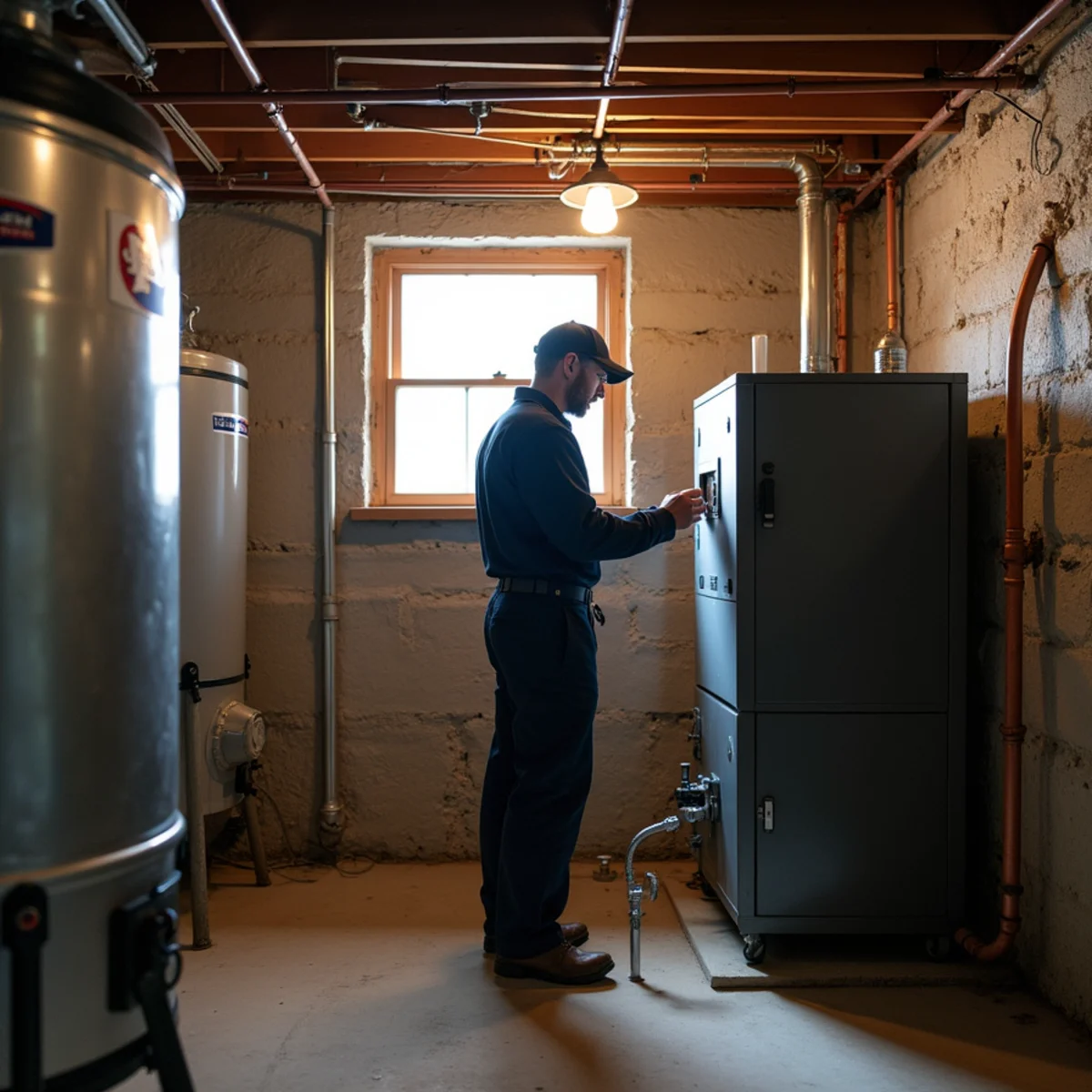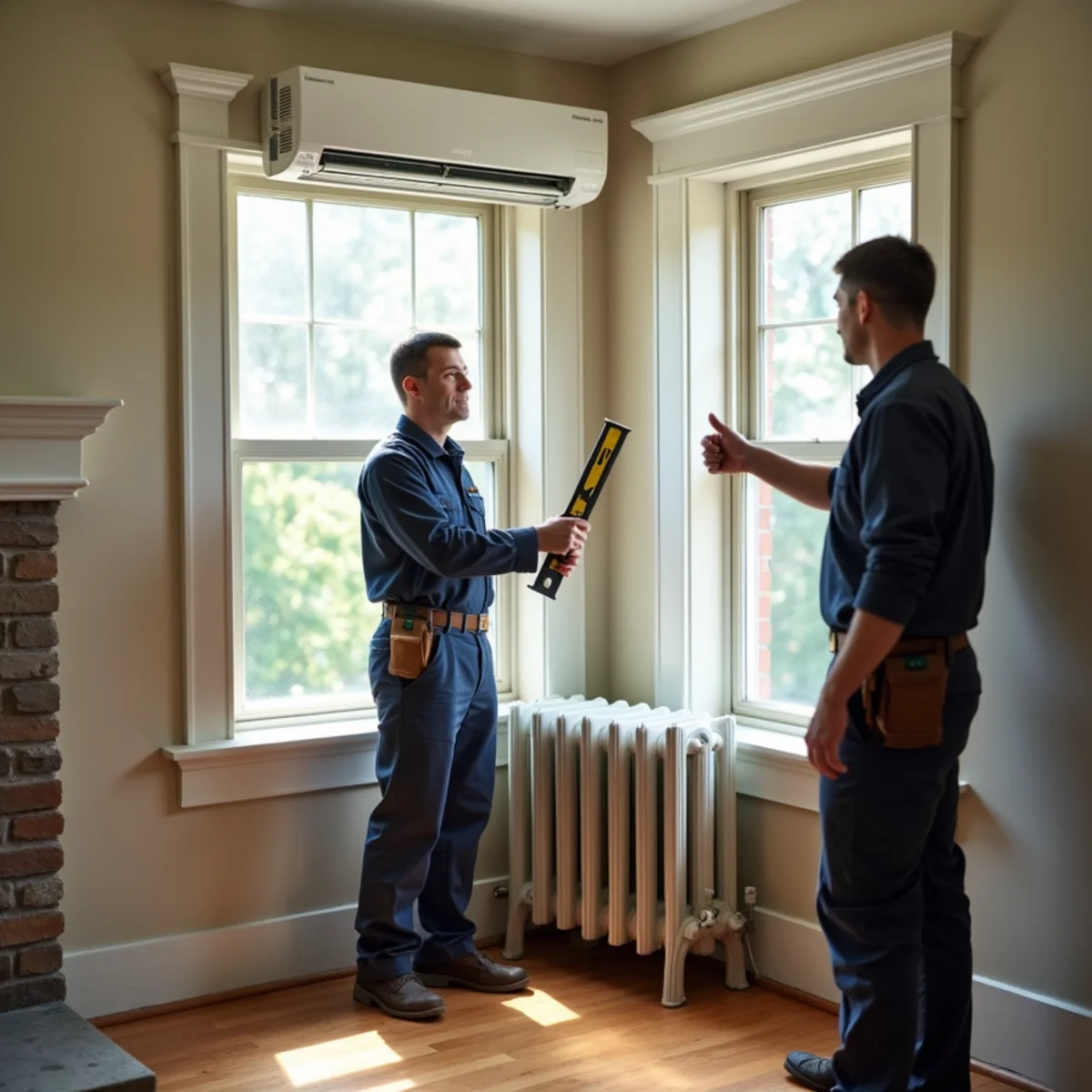
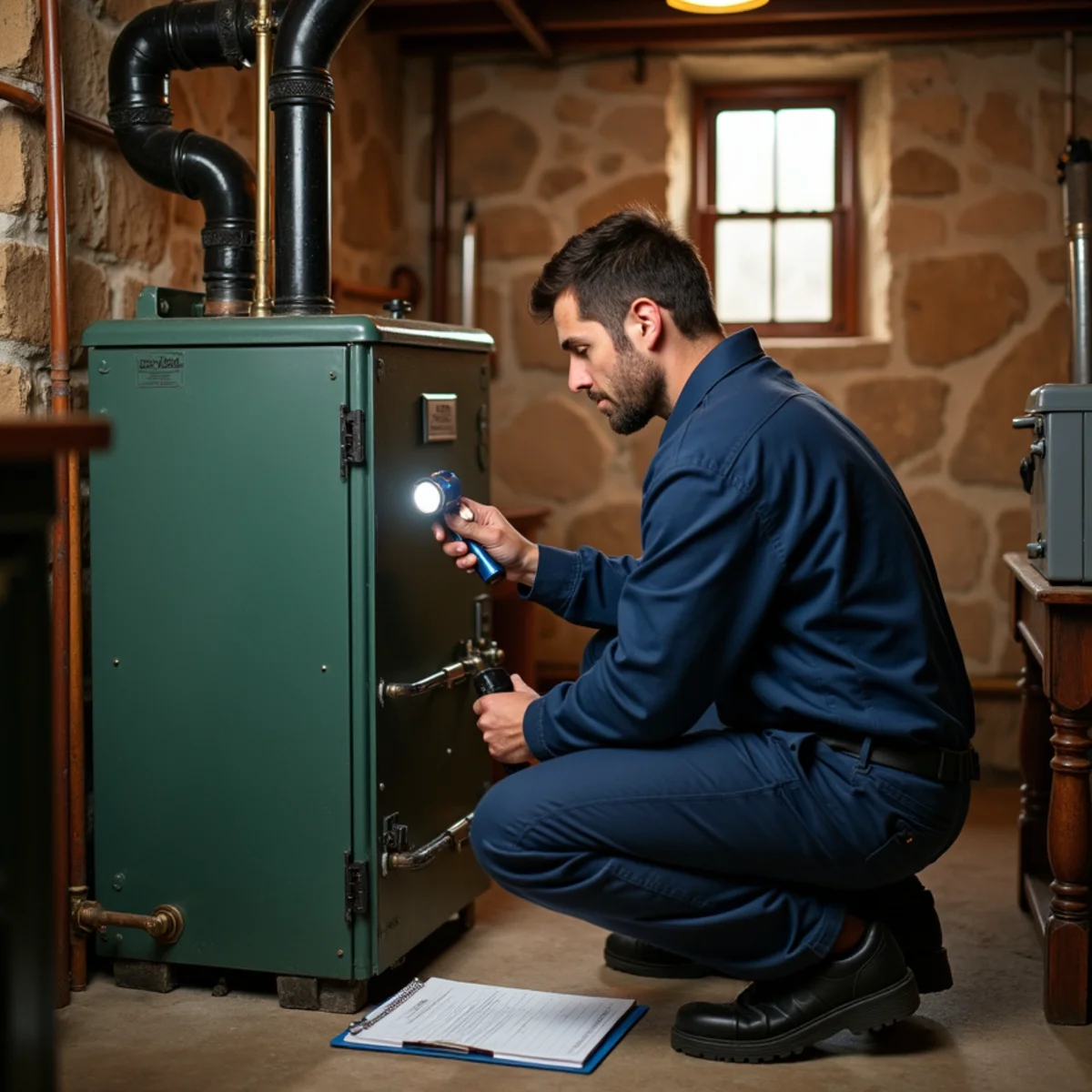
Boilers are a small slice of Blue Bell itself. Most of Whitpain Township was built after 1960 with forced air, and about 12% of homes still burn oil, many of them colonials with an oil-fired boiler feeding baseboard. Step five minutes outside the township and it's radiator country.
A boiler fails differently from a furnace. Gauges drift, air gets trapped, steam pipes bang, and an oil burner locks itself out after one bad start. The technician we send reads those signs, finds the cause and gives you a price before any repair starts. Every HVAC technician we send is licensed where Pennsylvania requires it, and insured.
Boiler problems we repair
- No heat: an oil burner in lockout, a gas boiler that will not light, a dead circulator, or a steam boiler shut down by its low-water cutoff
- Uneven heat: some radiators hot and others cold, or one zone that never warms up
- Noise: banging and knocking in steam pipes, gurgling or rumbling in a hot water system
- Water where it should not be: a dripping relief valve, a leaking pump or a cracked section
- Oil smell, smoke or soot around the burner
Hot water or steam: how to tell which system you have
It is the first question the technician will ask, and the basement usually answers it in a minute. Look, but leave the covers on.
| Look for | Steam | Hot water |
|---|---|---|
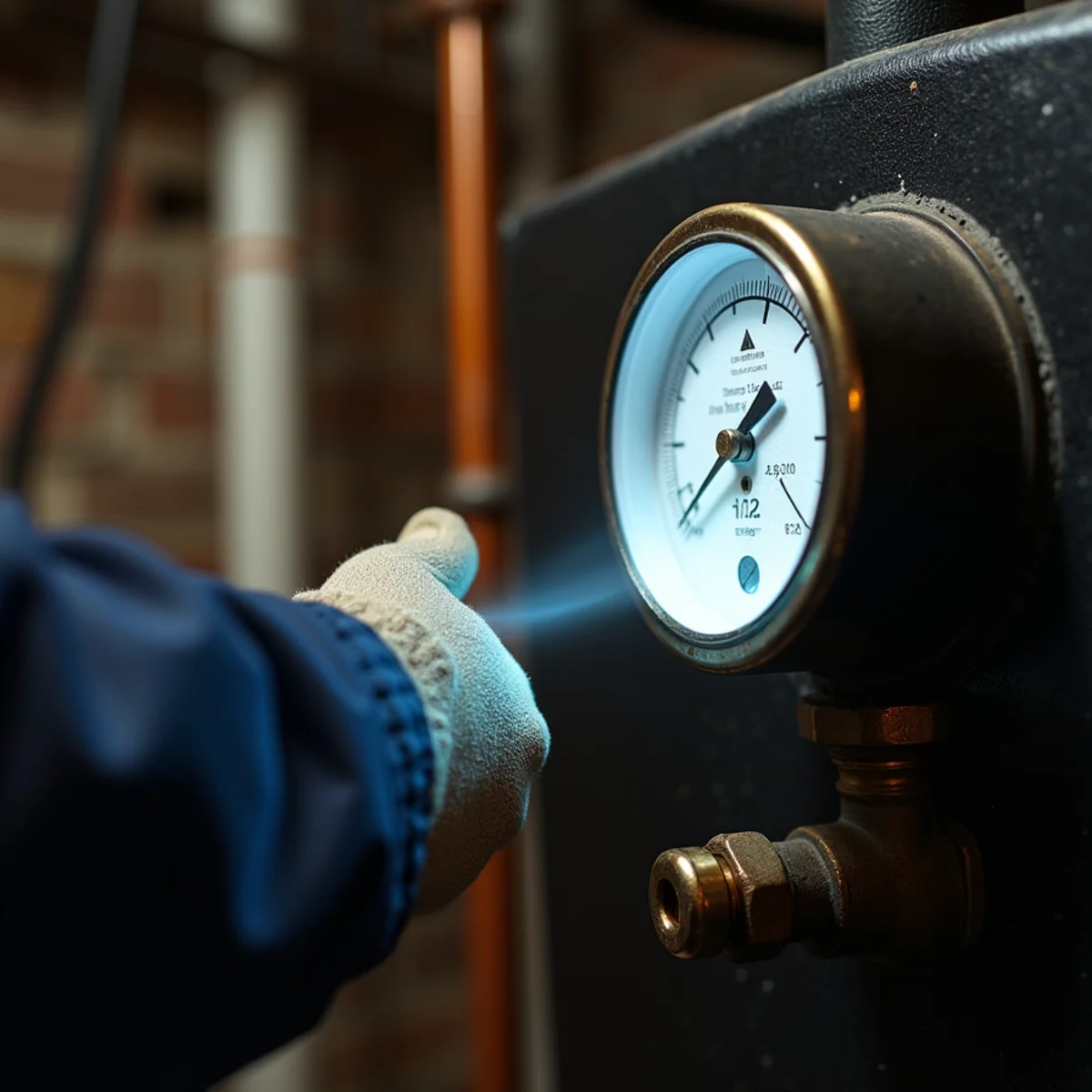
| Boiler gauge | Low-pressure gauge reading in ounces or a few psi | Pressure gauge at about 12 to 15 psi when cold |
| Glass tube on the boiler | Yes, a sight glass showing the water line | No |
| On each radiator | An air vent near the top (one-pipe steam) | A small bleed valve opened with a key |
| Pipes per radiator | Usually one | Two, supply and return |
| Near the boiler | Low-water cutoff, no pump | Expansion tank and circulator pump |
Steam is typical of the oldest houses, such as pre-war twins and rowhomes. Baseboard fin-tube heat is always hot water, which is what most oil-heated 1960s Blue Bell colonials have.
Cold radiators, banging pipes and air in the lines
Steam systems
Steam has to push air out through vents before it can fill a radiator. A vent stuck shut leaves that radiator cold; one stuck open hisses and spits. One-pipe radiator valves must be fully open or fully closed, since half-open traps water. Banging is water hammer: steam racing over condensate pooled in a pipe or radiator that lost its pitch as the house settled, or a boiler water line set too high. The fix is re-pitching, new vents or cleaning the boiler water, not a higher thermostat setting.
Hot water systems
Air rises, so top-floor radiators go cold first, often with gurgling. Bleeding helps, but air that keeps returning means fresh water is entering through a leak or an air eliminator has failed. A whole zone cold points to a stuck zone valve. A hot boiler with a cold house and a humming pump points to the circulator.
Leaks, low pressure and a dripping relief valve
The relief valve on a hot water boiler opens at 30 psi. If it drips, it is doing its job, and something pushed the pressure up. The usual causes are a waterlogged expansion tank whose bladder failed, or a fill valve passing too much city water. A gauge that keeps falling instead means water is escaping through a pump flange, a valve, old copper baseboard or a cracked cast iron section.
Never cap a relief valve
It is the last safety device on an over-pressured boiler. Put a bucket under it, note the gauge reading and call.
On steam, a sight glass that drops fast or an automatic feeder that runs daily usually means a rotted return pipe near the floor. That constant fresh water corrodes the boiler from inside.
Oil burner lockouts: nozzle, filter, igniter, or an empty tank
A light sensor called a cad cell watches for flame. If it sees none within seconds of startup, the primary control shuts the burner down and locks out, and the red reset button is how you know.
Press reset once, at most
Each press sprays oil into the combustion chamber. Pressing reset repeatedly can flood the chamber with oil, and the next ignition can cause a puffback that fills the house with soot. If it locks out again, leave it and call.
Check the tank gauge first. A tank run low pulls sludge into the filter and nozzle, so a delivery alone may not restart it. The technician then works through the oil filter, the nozzle, the igniter and electrode gap, the cad cell, pump pressure and a combustion test. Oil-fired warm-air furnaces in some 1960s Whitpain colonials use the same burner and the same fixes. A yearly tune-up with a new nozzle and filter prevents most lockouts.
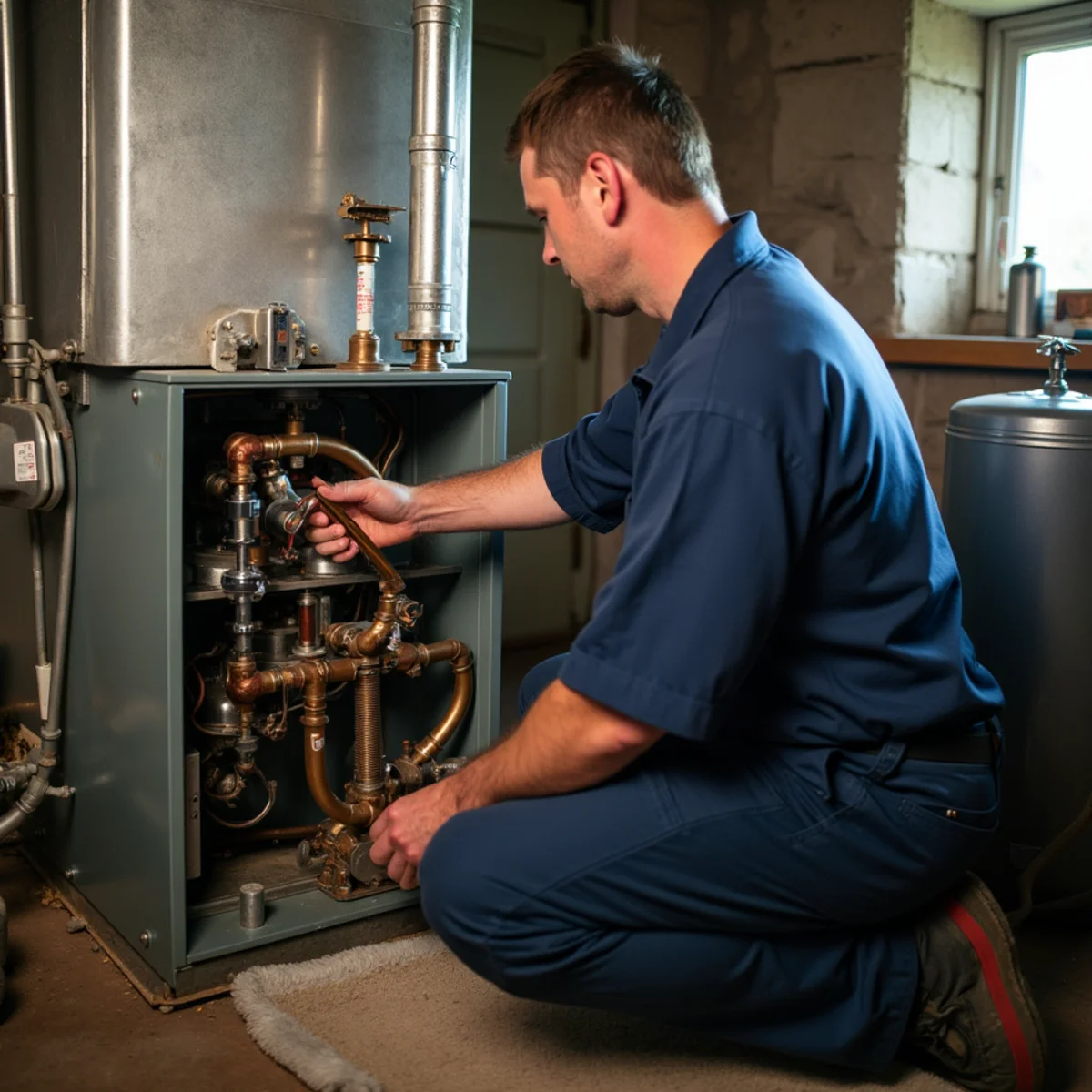
Gas boilers: ignition, circulator and zone valve failures
Older gas boilers with a standing pilot lose their thermocouple. Newer ones use spark or hot surface ignition with a flame sensor that fouls, plus a draft inducer whose pressure switch shuts everything down if the vent is blocked. On the water side, circulator bearings and motors wear out, and each zone valve has a motor head and an end switch: stuck closed, one floor goes cold; stuck open, the boiler keeps firing after the thermostat is satisfied. Condensing mod-con boilers add PVC venting, a condensate trap, fault codes and a heat exchanger that needs cleaning.
Where boilers are still common around Blue Bell: older homes in Ambler, Glenside and Norristown
Ambler's Victorian twins and stone houses grew up around the old Keasbey & Mattison works, and many still run steam. Much of Glenside predates central air and heats with radiators. Rowhomes in Norristown's West End and North End run aging boilers, often in rentals where no heat can't wait. Phoenixville and Media are similar, and as longer drives they get scheduled visits. See every town we cover.
Pipes near these boilers are sometimes wrapped in old insulation. Technicians will not disturb insulation that may contain asbestos. For cooling a house like this, see how to cool a radiator-heated house without ductwork.
How a boiler repair visit works, step by step
- Phone triage. Steam or hot water, oil or gas, and how many times the reset button has been pressed. Those three answers decide which technician goes.
- Safety first. The technician checks the flue and chimney connection, tests for carbon monoxide, and confirms the low-water cutoff on a steam boiler works.
- Read the boiler. Water level in the sight glass on steam, pressure and temperature on hot water, and any fault code on a modern gas boiler.
- Test the burner. On oil: filter, nozzle, electrodes, cad cell and a combustion test. On gas: ignition, flame sensing and gas valve.
- Check distribution. Circulator pump, zone valves, expansion tank, air vents and main vents, because a boiler that fires fine can still leave rooms cold.
- Price before work. You hear what failed and what the repair costs. Nothing is replaced until you approve it.
- Repair and a full firing cycle, with the radiators checked on more than one floor before the technician leaves.
What's included in a boiler or oil burner repair visit
- Combustion and carbon monoxide test, the most important check on any fuel-burning boiler.
- Burner service on oil equipment: nozzle, oil filter, electrodes and cad cell inspected, with replacements quoted if needed.
- Water side: sight glass and low-water cutoff on steam, pressure, relief valve and expansion tank on hot water.
- Circulation: circulator pump and zone valves on hydronic systems, main and radiator vents on steam.
- Flue and chimney connection checked for blockage, leaks and soot.
- Written findings and the price before work starts, including a straight answer on whether the boiler is worth repairing.
Old pipe insulation
Technicians will not disturb insulation that may contain asbestos.
Repair, replace or convert: what affects the cost
The price depends on steam or hot water, gas or oil, which part failed, access in a tight rowhome basement, parts availability for an older boiler, and whether it is an after-hours call. A vent or relay is small; a cracked section usually ends the boiler.
Replacement sizing differs from a furnace. A steam boiler is sized to the radiators it must fill, measured in square feet of equivalent direct radiation, not to the heat loss of the house. Getting that wrong is behind many noisy steam systems. Oil owners can also weigh gas or a heat pump; our article on oil heat in Montgomery County covers the trade-offs, and the HVAC installation page covers how conversions are done.
Why radiator-heated homes call Your Comfort Air Solutions for boiler repair
- A technician who works on boilers. Not every HVAC technician services steam, hot water and oil burners. We send one who does, matched to your system on the phone.
- Answered 24/7 in heating season. Cold radiators on a January night get a real conversation and a dispatched technician, not a message queue.
- The price comes before the repair, and you decide whether to go ahead.
- Honest repair-or-replace advice. A 40-year-old cast iron boiler that fires cleanly may have years left. One with a cracked section does not, and you will be told which you have.
- Licensed where Pennsylvania requires it, and insured, for every HVAC technician we send.
Boiler and Oil Heat Repair questions from Blue Bell homeowners
Why are some radiators hot and others cold?
In a steam system, the cold radiator usually has a vent stuck shut, a valve left half open, or trapped water because it lost its pitch. In a hot water system, the cause is usually air at the high points, which is why top-floor radiators go first, or a failed zone valve or circulator. If bleeding does not fix it, or the air keeps coming back, the system needs a technician.
My oil burner keeps tripping the reset button. Is it safe to keep pressing it?
No. Press reset once at most. Each press pumps oil into the combustion chamber, and repeated resets can flood the chamber and set up a puffback. A burner that locks out twice has a real fault: an empty or nearly empty tank, a clogged filter or nozzle, worn electrodes or a dirty cad cell. Check the tank gauge, leave the burner alone, and call for a technician.
How long does a cast iron boiler last?
A well-maintained cast iron boiler often runs 25 to 35 years, and plenty in Ambler and Glenside basements are older. What usually ends one is a cracked section, internal corrosion from years of fresh makeup water feeding a leak, or burner and control parts that are no longer made. Age alone is not a reason to replace a sound boiler, but poor combustion results and repeat repairs are.
Can you add air conditioning to a house heated by radiators?
Yes. The most common route is a ductless system: an outdoor unit and slim indoor heads in the main rooms, linked through a small hole in the wall, with no ductwork to build. A concealed ducted unit in the attic can serve several upstairs bedrooms instead. The radiators stay as the main heat. See ductless mini-splits for how it works.
How often should a boiler or oil burner be serviced?
Once a year, before heating season. Oil burners need it most: the nozzle and filter are replaced and the combustion is tuned, which keeps soot down and efficiency up. Gas boilers need a yearly combustion and safety check, and steam systems benefit from having the low-water cutoff flushed and the sight glass checked. Early fall is the best time to book.
I have an oil service plan with my fuel dealer. Who should I call?
If your heating oil company includes burner service in its plan, call them first for covered repairs, since you have already paid for it. If they cannot come out quickly, the problem is outside the plan, or the trouble is on the water side (circulator, zone valve, radiators or vents), call (321) 478-0693. We answer 24/7 and give the price before any work starts.