Roughly 28 percent of Whitpain Township homes heat with electricity, and in Blue Bell that mostly means heat pumps: 1980s and 1990s townhomes and condos, many Blue Bell Country Club carriage homes, and larger houses that paired a heat pump with a gas furnace.
A heat pump is an air conditioner running in reverse, pulling heat out of winter air. It behaves unlike a furnace, and plenty of calls turn out to be normal operation. The real faults are expensive to ignore, because a failing heat pump quietly hands the job to electric resistance heat.
Your Comfort Air Solutions answers 24/7 and sends an independent local technician who diagnoses before quoting. For the long version of winter behavior, read why a heat pump blows cold air in winter.
Heat pump problems we repair
- Lukewarm air and a house that cannot hold the setpoint
- An outdoor coil buried in ice that never clears
- Aux or emergency heat running constantly
- Cooling in heat mode, or heating in cool mode
- Water in the closet or a stain on the ceiling below the air handler
The same outdoor unit cools in summer, so the capacitors, contactors and drains covered under AC repair apply here too. Below are the parts only a heat pump has.
Blowing cold air in winter: defrost cycle, failed reversing valve or low refrigerant charge
Heat pump air leaves the register well below furnace temperature, so it feels cool on your hand while the house warms normally. Watch the thermostat, not the vent.
Defrost cycle: normal
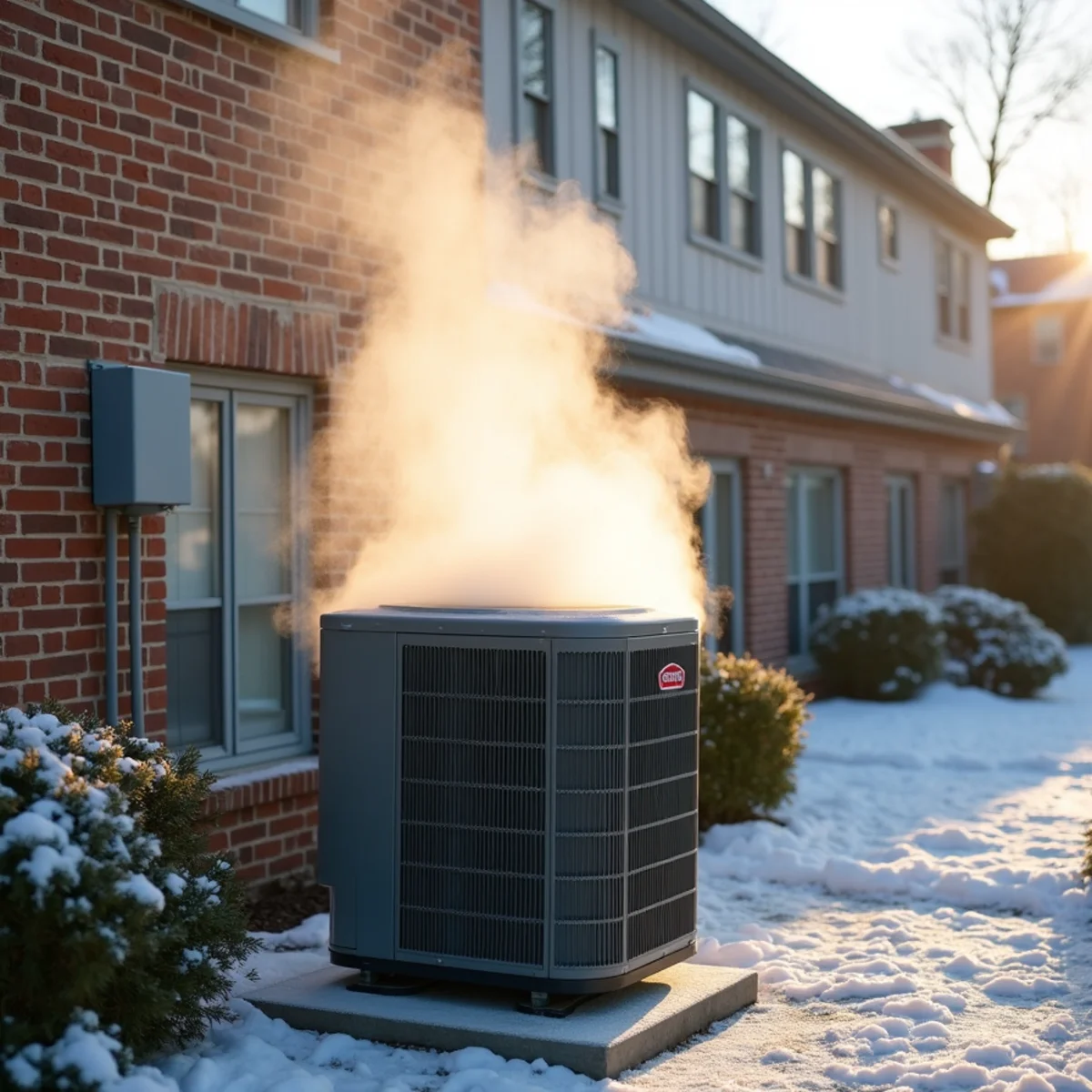
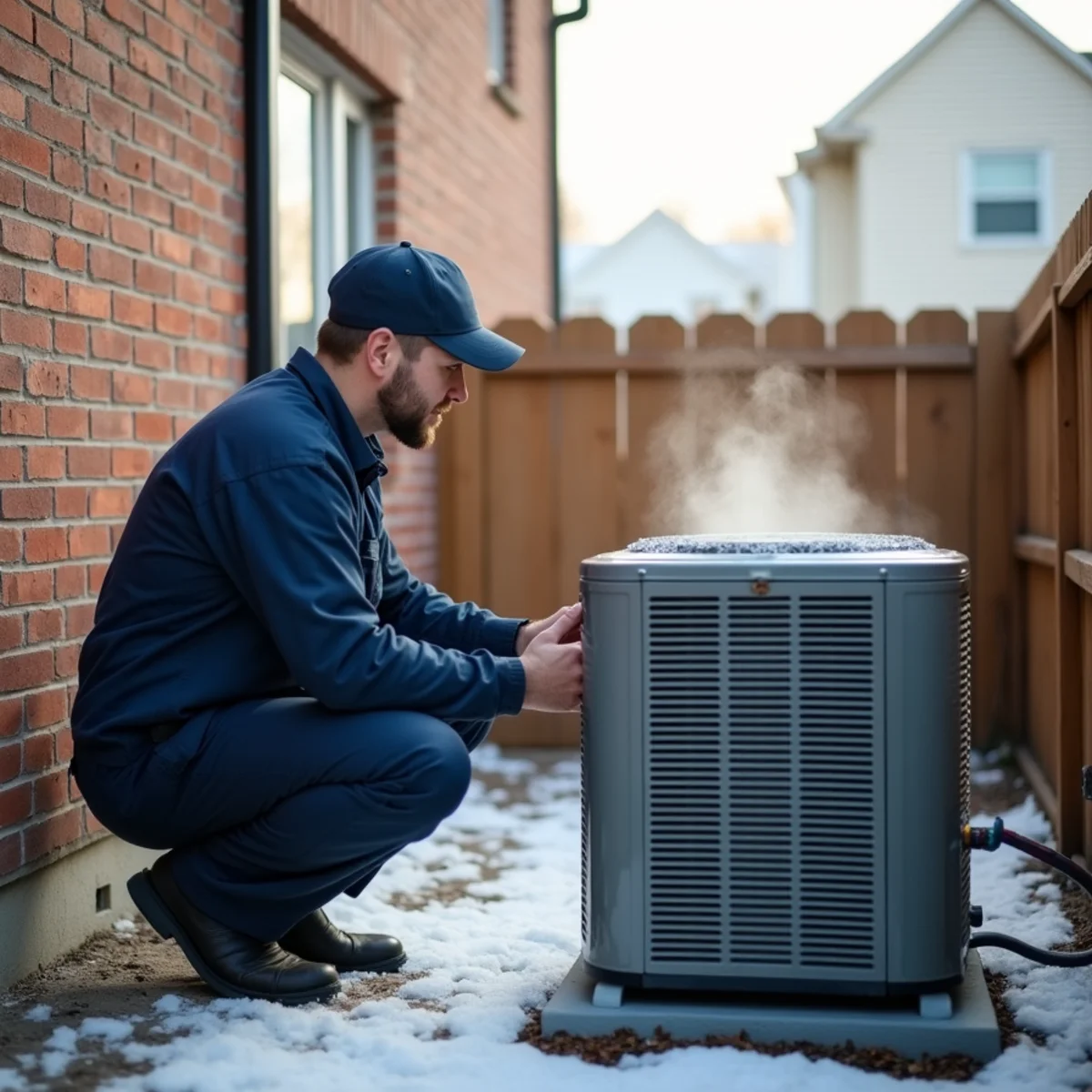
When frost builds on the outdoor coil, the system flips to cooling for a few minutes to melt it. The outdoor fan stops, the unit hisses and steams, and indoor air goes briefly cool until the strips catch up.
Reversing valve: a real fault
This four-way valve switches the direction of refrigerant flow. A failed solenoid coil is a quick fix. A valve body stuck partway leaves the system weak in both modes and means recovering the charge and brazing in a new valve.
Low charge: a real fault
A heat pump short on refrigerant loses heating capacity first, ices unevenly and leans on backup heat. Low charge always means a leak somewhere.
Outdoor unit iced over: what is normal and what is not
| What you see | Normal? | What it means |
|---|---|---|
| Light frost on a damp 30-degree morning | Yes | The next defrost clears it |
| Steam rising, outdoor fan stopped | Yes | Defrost in progress |
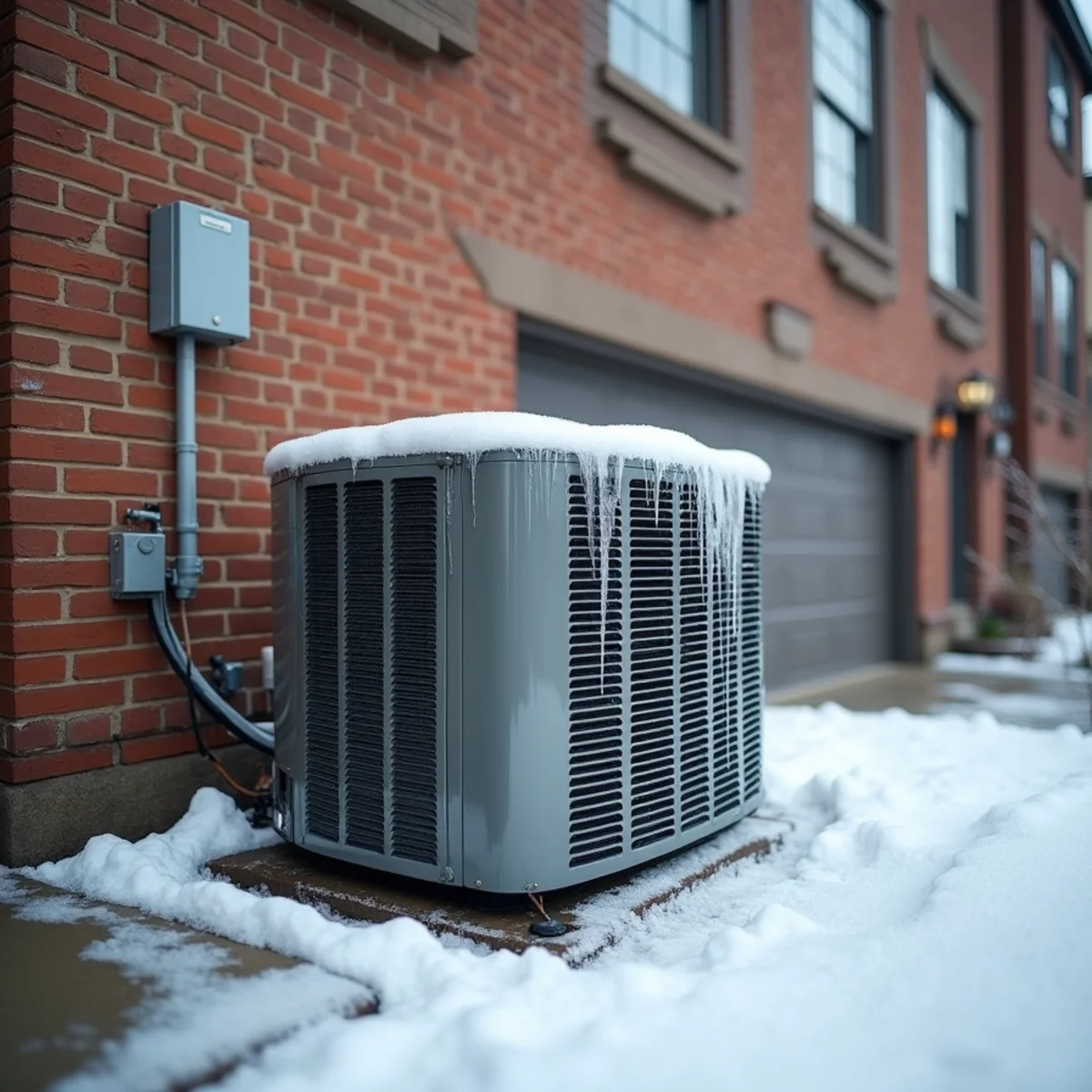
| Solid ice over the coil and top for hours | No | Defrost control, sensor or valve fault, or low charge |
| Ice only on the bottom of the coil | No | Low charge, or meltwater refreezing on a low pad |
| Ice sheet under a dripping gutter | No | Fix the gutter; defrost cannot beat a steady drip |
If the coil is encased, switch to emergency heat to protect the compressor and call. Never chip at the ice or pour hot water on it. Units should sit on risers a few inches above grade; plenty of townhome units sit on a low patio slab where meltwater refreezes around the base.
Auxiliary and emergency heat: why the electric bill jumps
Inside the air handler sit electric resistance strips. When the heat pump falls behind or defrosts, they switch on and the thermostat shows aux heat. Emergency heat is those strips alone, with the outdoor unit locked out. Resistance heat costs several times as much per hour as the heat pump, so strips that should not be running show up fast on a PECO bill. Common reasons they run too much:
- A thermostat never configured for a heat pump, or with its outdoor lockout set wrong
- Deep overnight setbacks that bring the strips on every morning
- A dead outdoor unit the strips have been covering for
- Emergency heat left on after an earlier problem
Replacing instead? See our guide to PECO rebates on a new heat pump.
Air handler faults: blower, heat strips, float switch
Blower. A weak capacitor or failing ECM module cuts airflow, which overheats the strips in winter and freezes the coil in summer.
Heat strips and sequencers. Strips are staged on by sequencers or relays. A burned element or open limit leaves you short of backup heat, which you discover on the coldest night of the year. These circuits carry heavy current at 240 volts, so testing them is strictly technician work.
Float switch. Closet and attic air handlers sit over a drain pan with a float switch. Some cut power to the entire system, so a winter no-heat call can trace back to a pan of water left over from fall.
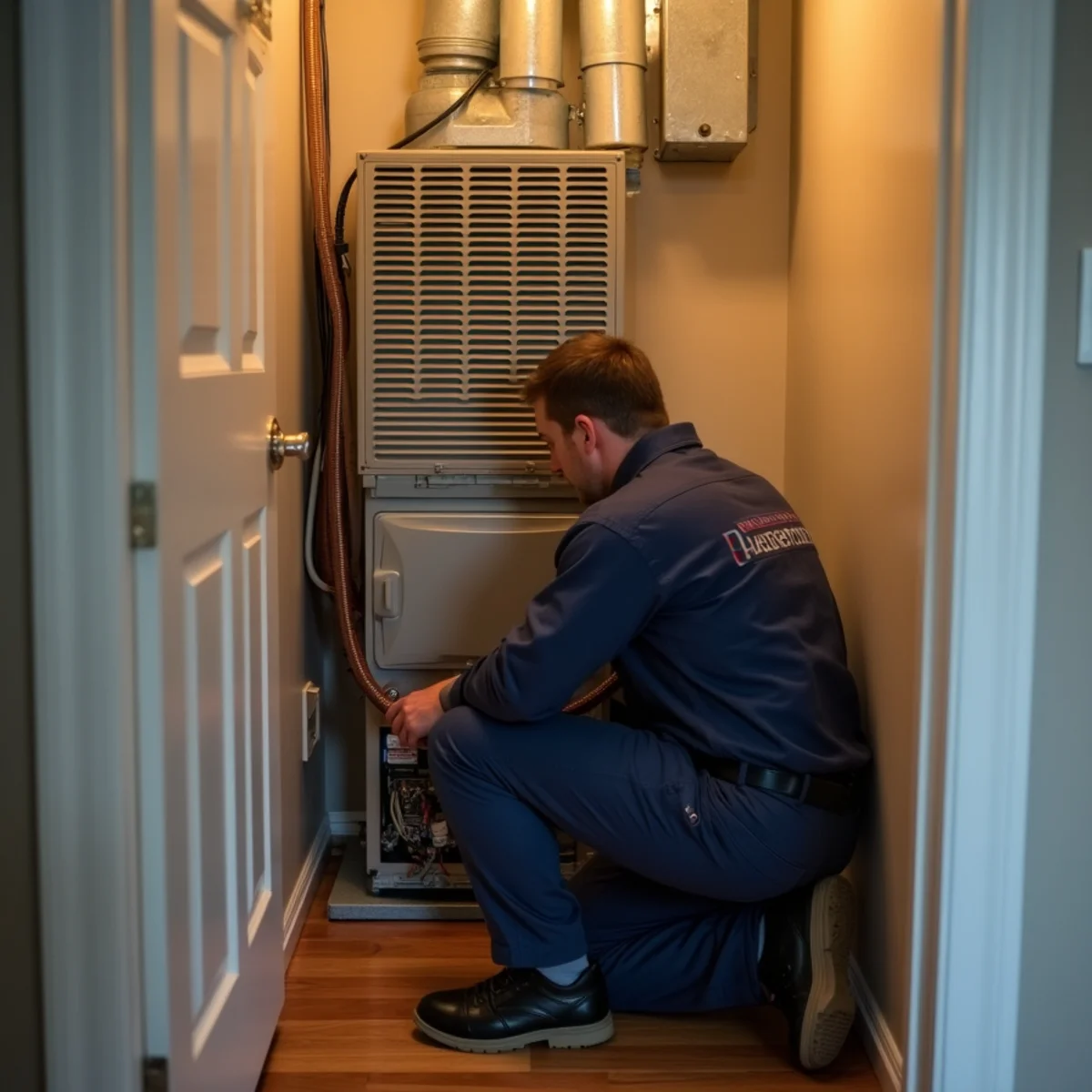
Heat pumps in Blue Bell townhomes and condos: closet air handlers, shared walls, association rules for outdoor units
Blue Bell Woods, Whitpain Hills and Whitpain Farm were built largely on heat pumps, with closet air handlers and outdoor units lined up behind the building. That layout brings its own problems:
- Tight closets. Awkward filter slots get skipped and the return starves.
- Units in a row. Neighbors recirculate each other's exhaust. Label yours.
- Hidden line sets. Refrigerant lines through shared walls or slabs make leaks harder to find and fix.
- Association rules. Relocating or replacing an outdoor unit may need HOA approval.
Similar townhome stock runs across our service areas, including the newer East End townhouses in Norristown. For a cold end-unit room, a ductless mini-split is sometimes the cleaner fix.
Dual-fuel systems: a heat pump with a gas furnace behind it
Dual fuel pairs a heat pump with a gas furnace instead of electric strips. The heat pump handles mild weather; below a balance point set from the equipment and current PECO gas and electric rates, the thermostat locks it out and fires the furnace. It suits larger Blue Bell homes that already have a gas furnace.
Repairs span both systems, with furnace repair on the indoor side and one more failure point in between: the control that picks which runs. The two must never heat at the same time, since furnace heat across the heat pump coil drives pressures dangerously high.
How a heat pump repair visit works
A heat pump has two jobs and a defrost routine, so the technician has to check it in more than one mode. Here is the order a good visit follows.
- Phone triage. We ask what the thermostat shows (an "aux" or "em heat" light tells a lot), whether the outdoor unit is iced, and how the house is holding temperature.
- Thermostat and settings. Mode, setpoint schedule and the reversing-valve wiring. A thermostat set up for the wrong system type causes more "broken heat pump" calls than you would expect.
- Outdoor unit inspection. Ice pattern, fan motor, coil condition, and whether snow or a dryer vent is smothering it.
- Defrost test. The technician forces a defrost cycle to confirm the sensor, control board and reversing valve all respond.
- Refrigerant pressures in heating and cooling. Low charge and a sticking reversing valve show up differently in each mode.
- Air handler check. Blower, heat strip amperage, filter and the condensate float switch in the closet or attic.
- Price before work, then a test in both modes after the repair, so you know it heats now and will cool in June.
What's included in a heat pump repair visit
- Both modes tested: heating, cooling and defrost, not just the one that failed.
- Electrical readings: compressor and fan capacitors, contactor, defrost board and outdoor sensor.
- Auxiliary heat check: strip amperage and sequencing, so you know whether the backup heat is running when it should not.
- Airflow: filter, blower speed and return path, which matter more on a heat pump than on a furnace.
- Drain and float switch on the air handler, common trouble spots in closet installations.
- Written findings and the price before work starts, including whether the unit uses R-22, R-410A or R-454B.
What affects heat pump repair cost
- Sealed-system work. Reversing valves, compressors and coils mean recovering the charge and brazing.
- Refrigerant. R-410A is still serviceable but rising in price; an R-22 heat pump is usually at its end.
- Electrical parts. Capacitors, contactors, defrost boards, sensors and sequencers are quicker jobs.
- Access. Attic air handlers and units behind fences take longer.
- Age. A heat pump runs in both seasons, so at 12 to 15 years it has more hours than an AC the same age.
When a big repair lands on an older unit, HVAC installation and replacement covers what a modern cold-climate heat pump changes.
Why heat pump owners around Blue Bell call Your Comfort Air Solutions
- Answered in a cold snap. When a heat pump stalls and the electric strips carry the house, every hour costs money. The line is answered 24/7.
- Technicians who work on heat pumps and dual-fuel systems. Defrost controls, reversing valves and the furnace-backup changeover need specific experience, so we match the call to it.
- Awareness of townhome and condo realities. Closet air handlers, shared walls and association rules about outdoor units come up on many Blue Bell Woods and Whitpain Hills calls.
- The price comes before the repair, and you choose whether to go ahead.
- Licensed where Pennsylvania requires it, and insured, for every HVAC technician we send.
Heat pump repair near Blue Bell
Heat pumps are concentrated in the townhome and condo communities across Whitpain Township, and in the towns around it built after 1980. We cover heat pump repair in Exton, where many West Whiteland townhomes still run their original units, and Collegeville, where 2000s subdivisions often pair a heat pump with a gas furnace.
In Lansdale, most of the borough buys power from Lansdale Electric rather than PECO, which changes the running-cost math. Newer downtown townhomes in Phoenixville and East End condos in Norristown round out the list. See all service areas.
Heat Pump Repair questions from Blue Bell homeowners
Is it normal for a heat pump to blow cool air or steam outside in winter?
Yes, within limits. Steam rising from the outdoor unit with its fan stopped is a defrost cycle, which normally finishes within a few minutes; indoor air may feel cool meanwhile. It is not normal if the house keeps losing temperature, the unit stays iced for hours, or the air is cold through the entire cycle. Those point to a real fault.
When should I switch the thermostat to emergency heat?
Only when the outdoor unit has a problem: encased in ice, not running, tripping its breaker or grinding and banging. Emergency heat locks out the heat pump and runs the electric strips alone, which keeps the house warm and protects a failing compressor but costs much more to run. Switch over, then call for repair. Do not use it just because it is cold outside; the system already brings in backup heat automatically when it needs it.
Why did my electric bill double in January?
Usually because the electric strips did most of the heating. That happens when the heat pump failed and the strips carried the house unnoticed, when the thermostat brings strips on too early, when deep setbacks trigger them every morning, or during a long stretch in the teens with an older single-stage unit. Watch how often the thermostat shows aux or emergency heat. If it shows up on mild days, have the system checked.
Do heat pumps still work when it drops into the teens?
Yes, but how well depends on the unit. Cold-climate heat pumps with variable-speed compressors keep producing useful heat well below freezing. Older single-stage units from the 1990s and 2000s lose capacity quickly as temperatures fall and lean on backup strips in the teens. That is by design rather than a failure, but it is costly to run. Dual-fuel systems sidestep it by switching to gas when it gets that cold.
Is it normal for a heat pump to run constantly in cold weather?
Long run times are normal below freezing. A heat pump delivers steady, lower-temperature heat, so on a 25-degree day it may run almost nonstop to hold the setpoint. What is not normal is the house losing ground, the auxiliary heat light staying on for hours, or ice that never clears between defrost cycles. Those point to low charge, a defrost fault or an airflow problem.
How long does a heat pump last in southeastern Pennsylvania?
Most air-source heat pumps last roughly 12 to 15 years here, a little less than a central air conditioner, because they run in both seasons. Townhomes built in the 1990s and early 2000s are often on their first or second unit now. Age alone is not a reason to replace one. Repeated compressor or reversing-valve trouble, or an R-22 system that needs refrigerant, usually is.