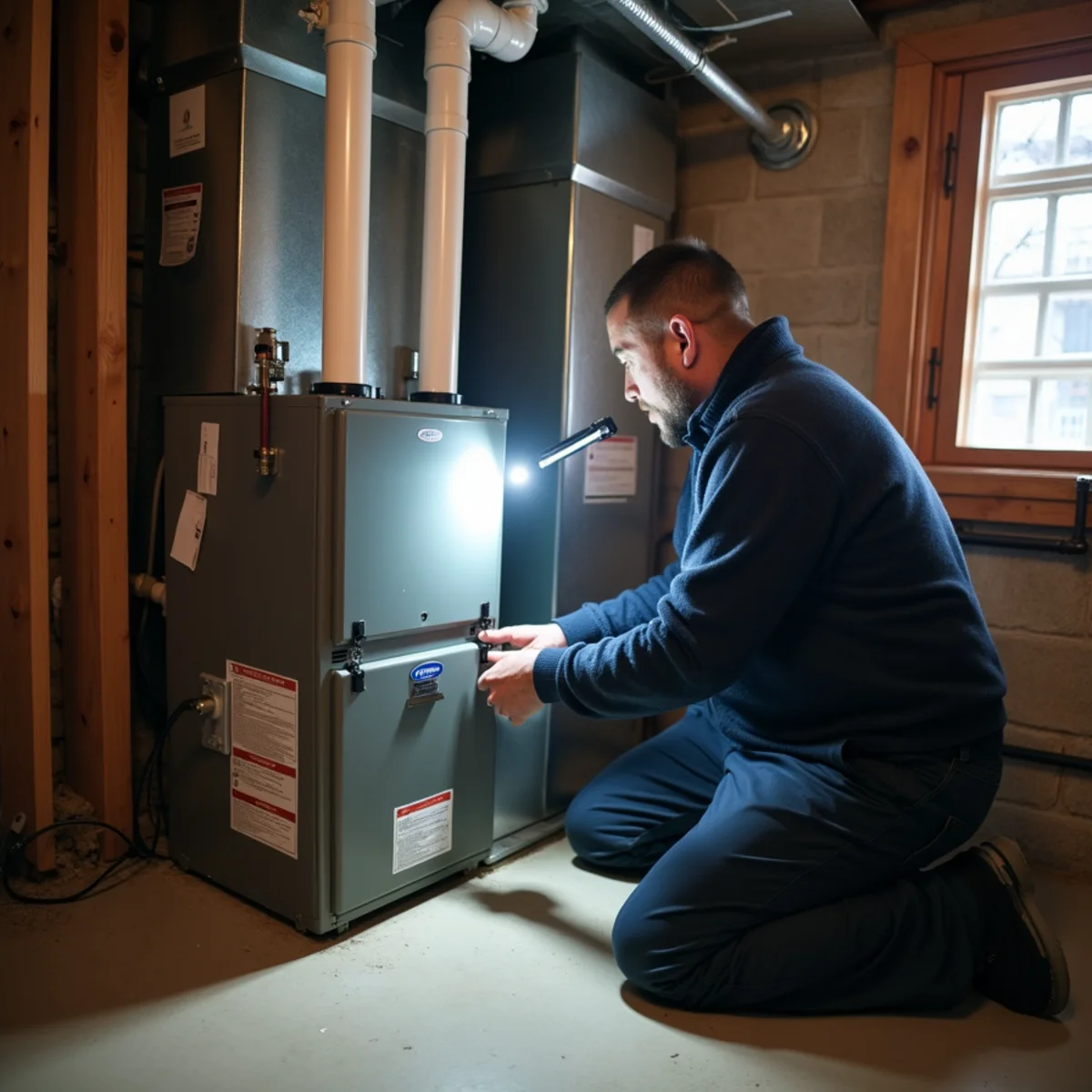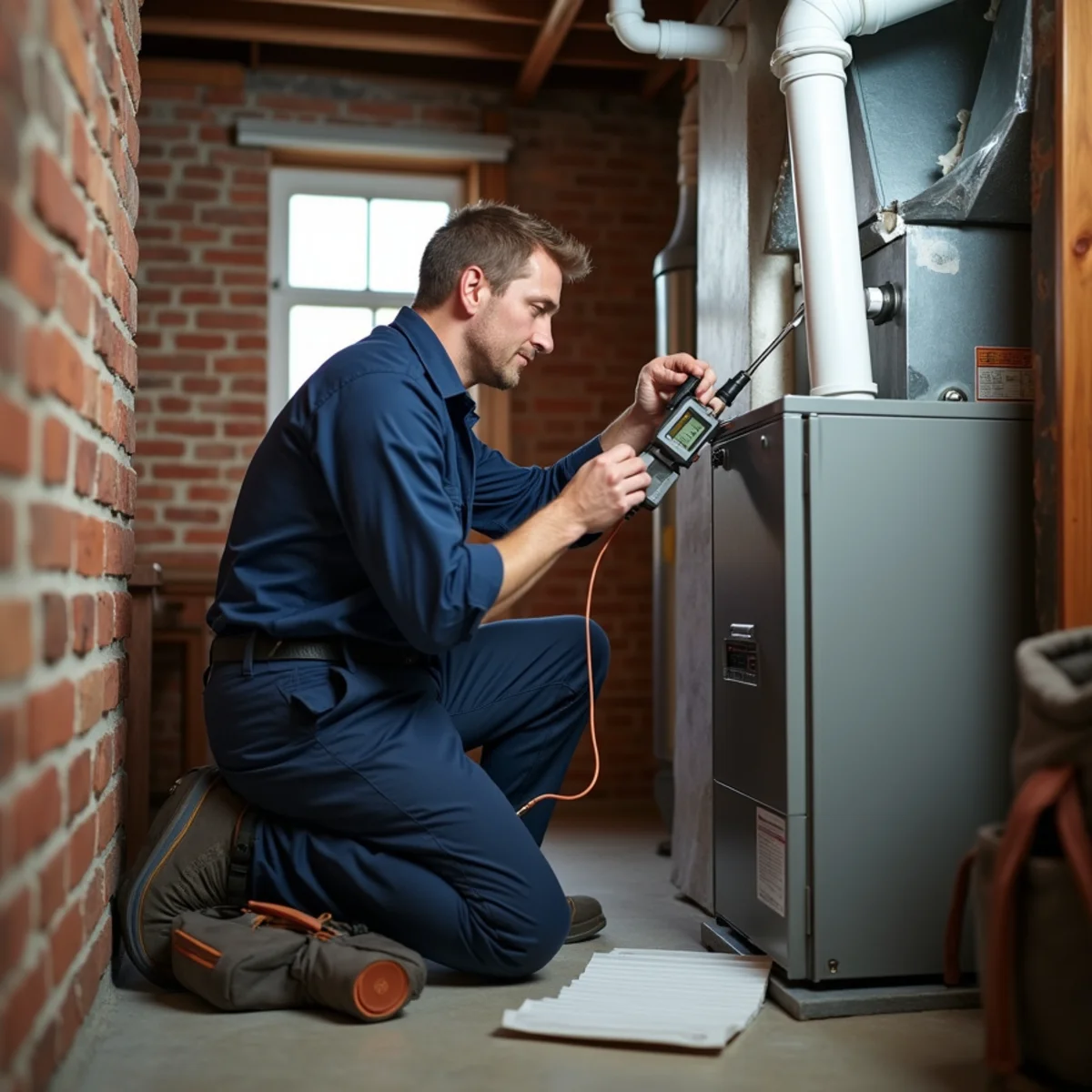
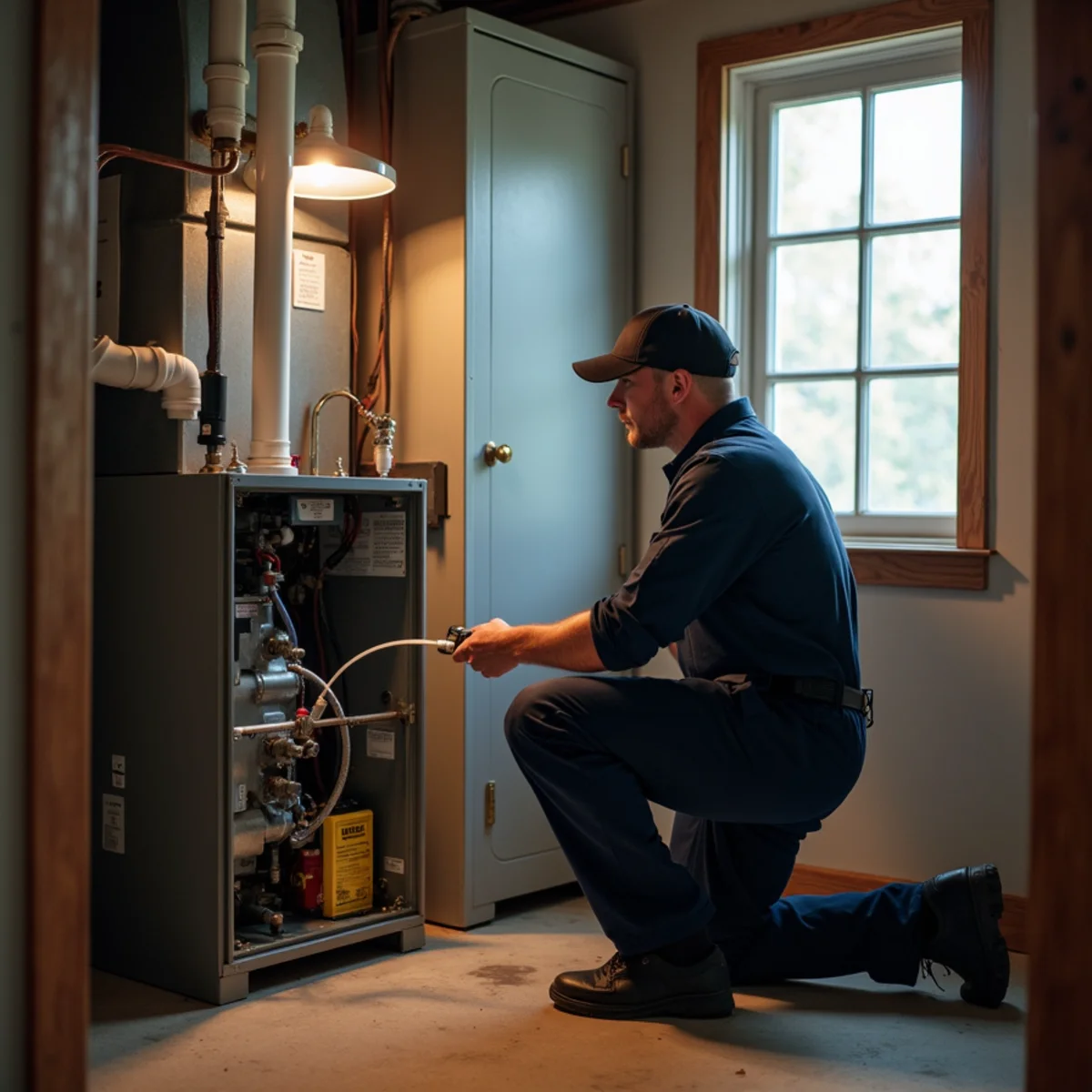
A gas furnace that will not heat is usually telling you why, if someone reads it. Most furnaces built since the mid-1990s flash a fault code through a small window in the blower door, and the startup sequence (inducer, pressure switch, igniter, gas valve, flame proving, blower) narrows the failure to a single step.
About 57 percent of Whitpain Township homes heat with PECO natural gas, most through forced-air furnaces in basements, attics and townhome closets. Your Comfort Air Solutions takes those calls 24 hours a day and sends an independent local technician to diagnose the problem. Every HVAC technician we send is licensed where Pennsylvania requires it, and insured.
Want to rule out the simple causes first? Our no-heat checklist covers thermostat batteries, the furnace switch and the filter. Radiators instead of vents? Go to boiler and oil heat repair.
Furnace problems we repair in Blue Bell
- No heat at all, or a blinking error code
- Burners light, then shut off within seconds
- Blower runs but the air stays cold
- Short cycling every few minutes
- A loud bang at ignition
- Squealing, rumbling or a rising whine at startup
- Burning, electrical or rotten-egg smells
- Water pooling around a high-efficiency furnace
Basements here hold the usual brands, from Carrier, Trane and Lennox to Rheem, Goodman and York, and most repairs use standard parts. The same work runs across our whole service area, from Norristown twins with aging gas furnaces to newer forced-air homes in the Ambler 19002 zip.
No heat, short cycling, cold air from the vents: reading the symptoms
| What you notice | Usually points to |
|---|---|
| Nothing happens, no click, no fan | Thermostat, tripped breaker, the furnace switch turned off, or a blown board fuse |
| Small fan hums, burners never light | Pressure switch not closing: blocked vent, cracked hose, clogged condensate trap |
| Burners light, then go out in seconds | Dirty flame sensor or a poor ground |
| Igniter never glows | Cracked hot surface igniter or a board fault |
| Burners run, vents blow cold | Blower fault, or overheating that trips the high limit |
A minute of cool air at the start of a cycle is normal while the heat exchanger warms. Cold air for the whole cycle is not. Count the LED blinks and read them to the dispatcher; the code chart is printed inside the furnace door.
Ignition and flame-sensor faults, the most common no-heat call
Modern furnaces light with a hot surface igniter that glows orange before the gas valve opens. Older silicon carbide igniters are brittle and crack with age, and after three failed tries the board locks out.
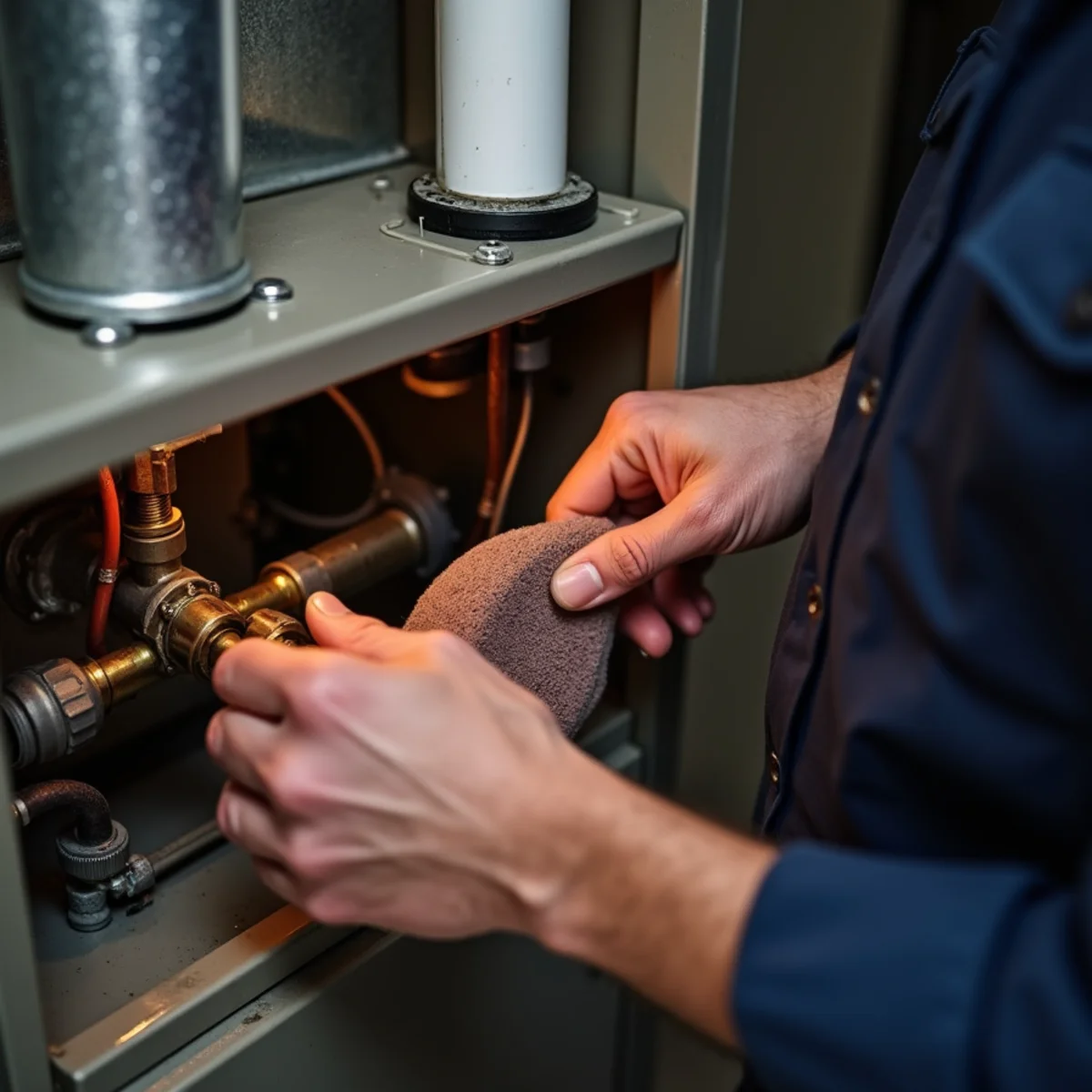
The flame sensor is a thin rod sitting in the burner flame that proves fire by passing a tiny microamp current. Over a season it builds an oxide coating, the signal drops, and the board cuts the gas after a few seconds. The fix is cleaning the rod and checking the microamp reading against spec. A sensor that fouls again fast can mean poor combustion, or laundry chemicals stored beside the furnace.
Blower motors, inducer motors and control boards
Blower motor
Older PSC blowers run on a capacitor, and a motor that hums without spinning often just needs that capacitor. Variable-speed ECM motors fail at the electronic module, which can sometimes be replaced without the whole motor.
Inducer motor
This small fan pulls combustion gases through the heat exchanger and out the vent. Worn bearings whine or grind at startup, often for weeks before it quits, and without draft the burners never light.
Control board
Boards fail from surges, age and water, often from a condensate trap or AC coil drain dripping onto them. A good technician tests its inputs and outputs before condemning it.
Cracked heat exchangers and carbon monoxide: when a furnace has to stay off
Gas smell or CO alarm
Get everyone out of the house first. Once you are outside, phone 911 and then PECO's gas emergency line. Do not restart the furnace or go back in until responders say it is safe. Call us after that.
The heat exchanger is the metal wall between the flame and your house air. Years of expansion open cracks at bends and seams that can let carbon monoxide into the airstream. Warning signs: flames rolling out of the burner opening or wavering when the blower starts, soot, rust flakes on the burners and a tripped rollout switch.
The technician confirms with a camera inspection where the design allows and a combustion analysis. A confirmed crack means the gas is shut off and the furnace is tagged. It stays off, and on a furnace past 15 years, replacement is the realistic answer. Keep CO alarms on every level and near bedrooms.
High-efficiency furnaces: blocked PVC vents and frozen condensate lines in a cold snap
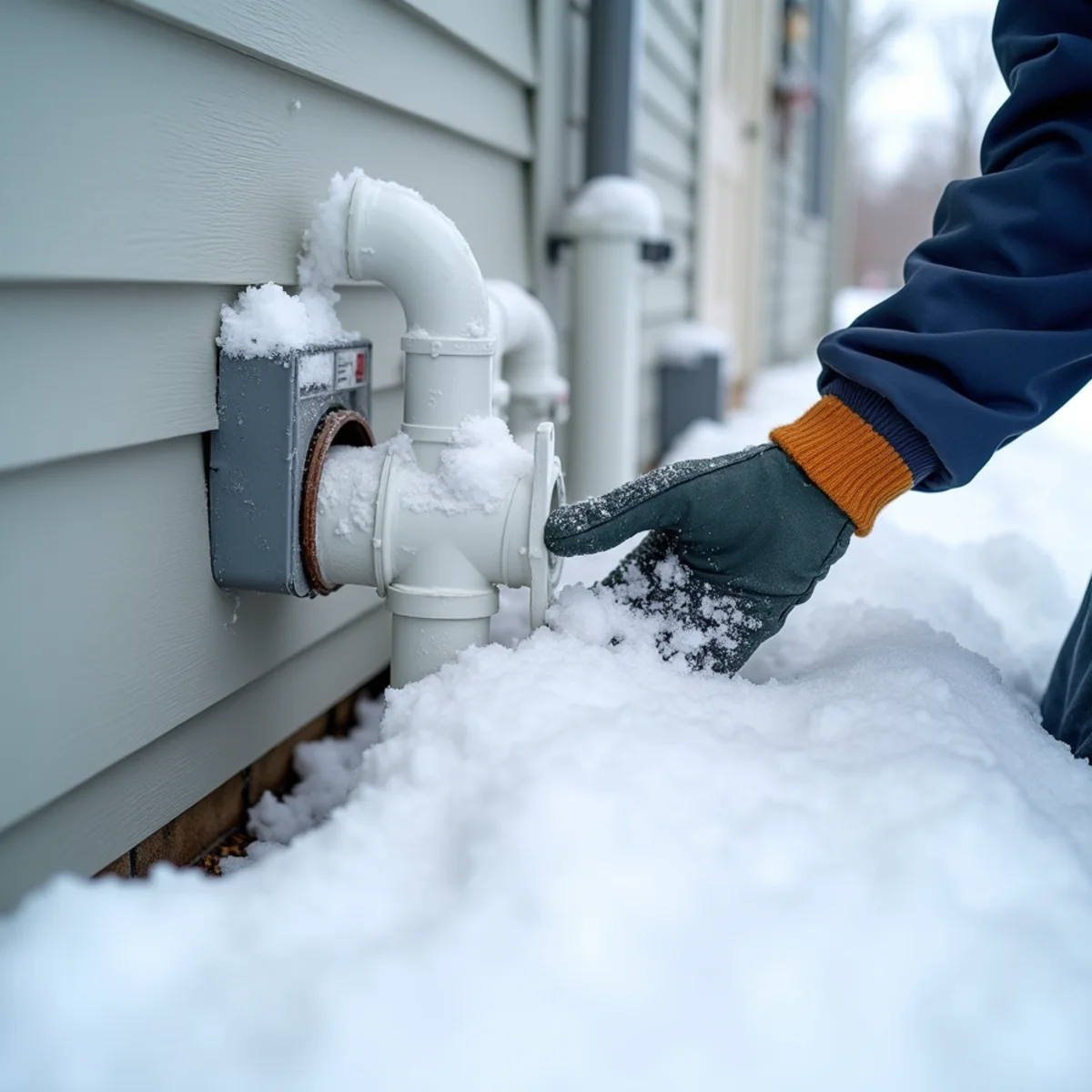
A 90 percent-plus furnace pulls so much heat from its exhaust that the gases condense into water. It vents through two white PVC pipes out a side wall and drains acidic condensate through a trap to a floor drain or pump. Both fail in exactly the weather you need heat:
- Drifted snow or ice covers the intake or exhaust pipe and the furnace locks out. Brush it clear gently.
- A condensate line through a cold crawlspace or outside wall freezes, water backs into the trap and a safety switch shuts the furnace down.
- A condensate pump dies and the furnace stops or leaks onto the floor.
The technician thaws the line, cleans the trap and reroutes or insulates whatever froze. Older 80 percent furnaces avoid this but vent through a metal flue into the chimney, where a blocked or deteriorating liner is the thing to check.
Gas furnaces in 1980s to 2000s Whitpain Township homes: age, sizing and what wears out
Most Blue Bell houses went up between the 1980s and early 2000s. The builder furnaces in Blue Bell Country Club and similar developments were largely replaced between about 2008 and 2015, so those second furnaces are now 11 to 18 years into a 15 to 20-year life. That is when inducers, igniters and ECM modules start to go.
Sizing is the other recurring problem. Many replacements copied an oversized builder nameplate instead of running a Manual J load calculation, so the furnace short-cycles and wears out ignition parts faster. In the 1960s and 1970s colonials around Center Square and Broad Axe, a third furnace, sometimes after an oil-to-gas conversion, often runs on ductwork sized for its predecessor. If a repair turns into a replacement, HVAC installation explains proper sizing.
What a furnace repair visit looks like, step by step
A no-heat call follows the same order every time, because the furnace itself runs in a fixed sequence. Testing in that order finds the step where the sequence stops, instead of guessing at parts.
- Triage on the phone. We ask what the furnace is doing, whether anyone smells gas, and whether the house has a baby, an elderly parent or pipes at risk. A gas smell means leaving and calling 911 and PECO first.
- Safety check on arrival. The technician looks at the flue or PVC vents, checks for carbon monoxide at the furnace and confirms gas pressure is safe to work with.
- Read the control board. Most furnaces from the 1990s on blink a fault code that narrows the search to ignition, pressure switch, limit or flame proving.
- Test the sequence. Inducer motor, pressure switch, igniter resistance, gas valve and flame-sensor current, in the order the furnace uses them.
- Price before work. You hear what failed, why, and what the repair costs. Nothing is replaced until you approve it.
- Repair and a full heating cycle. After the fix, the technician runs the furnace through several cycles and checks the temperature rise against the nameplate.
What's included in a furnace repair visit
- Carbon monoxide and gas-leak check at the furnace and the flue connection.
- Venting inspection: metal flue and chimney liner on 80% furnaces, PVC intake and exhaust terminations on 90%-plus models.
- Filter and blower: filter condition, blower wheel buildup, motor capacitor and amperage.
- Ignition and flame proving: hot surface igniter, flame sensor microamp reading, gas valve operation.
- Safety controls: pressure switch, high-limit and rollout switches, which shut the furnace off when something is wrong and should never be bypassed.
- Condensate trap and drain on high-efficiency furnaces, the usual culprit when one quits in a cold snap.
- Temperature rise and thermostat check, then written findings and the price before any work starts.
What affects furnace repair cost
- The failed part. Flame sensor cleaning and igniters at the low end; boards, ECM motors and inducers higher; a heat exchanger is usually a replacement decision.
- Part availability. Some boards and motors are brand-specific and take a day or two.
- Location. Attic and tight closet furnaces take longer than an open basement.
- Warranty. Many furnaces carry 10-year parts coverage if registered; the serial number tells.
- Hour of the call. Any after-hours rate is quoted up front.
A fall tune-up (sensor, igniter, inducer, pressure switch, heat exchanger and condensate trap) catches most failures on this page before the first cold night. For more, see what furnace repair costs around Blue Bell.
Why Blue Bell homeowners call Your Comfort Air Solutions for furnace repair
- No-heat calls answered at 2 a.m. The phone is answered 24/7 all winter, including the single-digit nights when furnaces fail most.
- You see the evidence before a big repair. If a heat exchanger is called cracked, ask to see the crack or the camera image. A furnace should never be condemned on a hunch.
- The right furnace experience. An 80% furnace on a chimney and a 90%-plus condensing furnace with PVC vents fail in different ways. We send a technician who works on your type.
- The price comes first. The repair is quoted before any part is replaced, and you decide whether to go ahead.
- Licensed where Pennsylvania requires it, and insured. That applies to every HVAC technician we send into your basement.
Furnace repair around Blue Bell and Whitpain Township
Most of our furnace calls come from the 1980s to 2000s homes across 19422, from Center Square and Broad Axe to the developments off Skippack Pike. We also cover furnace repair in Norristown, where rowhome furnaces sit in tight basements and a no-heat call in a rental needs fast answers, and Ambler, where newer gas furnaces often replaced oil in older houses.
Lansdale homes mix early-1900s twins and post-war singles, many on gas furnaces that have been replaced once. Collegeville subdivisions have original 1990s and 2000s furnaces reaching the end of their service life. The service areas page lists every town we cover.
Furnace Repair questions from Blue Bell homeowners
Why does my furnace start and then shut off after a few seconds?
Burners that light and go out within a few seconds are the textbook sign of a dirty flame sensor. The board cannot detect the flame, shuts the gas off for safety, retries, and locks out after a few attempts. Less often the cause is a poor ground, low gas pressure or a cracked igniter lighting the burners unevenly. The technician cleans and tests the sensor and checks the microamp reading. It is usually a short repair.
Is it safe to keep running a furnace that smells like burning?
A dusty smell for the first hour of the season is normal; dust is burning off the heat exchanger. A sharp electrical or plastic smell, one that keeps returning, or any smoke is not. Turn the furnace off at the thermostat and the furnace switch and call. Common causes are an overheating blower motor, a failing capacitor or damaged wiring. If it smells like rotten eggs, that is gas: leave the house and call 911 and PECO from outside.
How long should a gas furnace last in this climate?
Most gas furnaces in Montgomery County last about 15 to 20 years with yearly maintenance. Winters here put real hours on a furnace without the punishment of colder regions, so a correctly sized, maintained unit often reaches the upper end. Oversized furnaces that short-cycle, units in dusty basements with neglected filters, and high-efficiency models with recurring condensate problems tend to fall short. Past 15 years, a cracked heat exchanger usually settles the question.
Can someone come out for no heat at night or on a weekend?
Yes. The phone is answered around the clock, including holidays, and no-heat calls go to the nearest available technician at any hour. Any after-hours rate is explained on the call, and the repair price comes before work starts. While you wait, close curtains, keep interior doors open and open sink cabinets on outside walls. Our 24/7 emergency HVAC repair page has more on what to do in the meantime.
Is it worth repairing a 20-year-old furnace?
Often, yes, for an inexpensive part. An igniter, flame sensor, inducer motor or pressure switch can keep a sound 20-year-old furnace running for years. The answer changes with a cracked heat exchanger, a failed control board on a model with scarce parts, or a furnace that has needed several repairs in a row. The technician will tell you which side of that line your furnace is on, and what a replacement involves.
What does a fall furnace tune-up include?
A fall tune-up runs the furnace through its full sequence before the first cold night: igniter and flame-sensor check, burner inspection, combustion and carbon monoxide test, heat exchanger inspection, blower cleaning, filter change, safety-control test and, on high-efficiency models, a flushed condensate trap and clear PVC vents. Booking it in September or October avoids the first-cold-snap rush.